In brief
Amid the troubling backdrop of the escalating conflict in Iran, many migrant workers from Asia find themselves grappling with a perilous dilemma. As tensions rise and violence spreads, these workers must decide whether to continue risking their lives in the Gulf for the better wages needed to support families back home or return to their nations where fewer opportunities are available. This article explores the stories of affected individuals and the broader implications for migrant labor in the region.
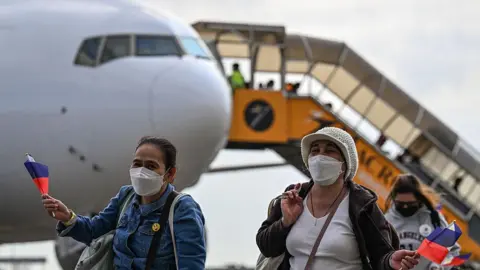
All Norma Tactacon can do is pray as the sirens blare. The 49-year-old, who works in the Middle East as a domestic worker, is thousands of miles away from her family in the Philippines. Stuck in Qatar, a nation caught in the crossfire of the US and Israel's war on Iran, her only hope is to return home safely. 'I get scared and nervous every time I see pictures and videos of missiles in the air,' she explains. Wealthy Gulf states, hosting US military bases, have turned into targets of Iranian strikes. Consequently, many expats are leaving, and tourists staying away, leading to uncertainty for the millions of migrants who have long supported these economies. Tactacon had dreams of funding her children's education, a goal now at risk. Despite the danger, her salary remains vital, as Filipino workers earn significantly more in the Gulf than at home. With casualties among South Asian migrant workers rising, including dead from missile strikes, the war has forced many to reconsider their futures. Repatriation is underway, but with disrupted travel and the ongoing conflict, the risk remains high. While some continue working, others like Su Su, who fled civil unrest in Myanmar, find different safety concerns. As the conflict continues, the migrant community is left in a precarious balance between safety and economic necessity.