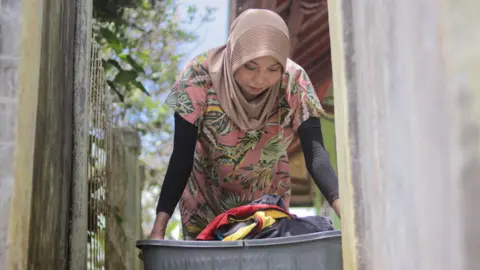
Indonesia's parliament has passed a law to protect the rights of domestic workers, more than 20 years after it was first introduced. The country is home to some 4.2 million domestic workers, of which almost 90% are women. Previously, they were not legally classified as workers. The new law entitles them to health insurance, rest days, and pensions. Furthermore, placement agencies are prohibited from implementing wage deductions, and it is now illegal to hire children under the age of 18 as domestic workers.
Upon hearing of the bill's passage, many workers expressed emotional relief, with one worker describing it as the culmination of a 22-year struggle to gain protection. The Domestic Workers Protection Law, first proposed in 2004, faced numerous obstacles over the years before being revived in parliament in 2020. Regulators now have a year to draft implementation policies.
Despite contributing significantly to the economy, many domestic workers had been left unprotected under local labor laws, often working informally without contracts and facing long hours for little pay, sometimes starting work as young as 12 years old. It feels like a dream, said Ajeng Astuti, one of the workers involved in the struggle. Another worker, Jumiyem from Yogyakarta, remarked, We've been longing for this [law], and now we can feel it.
While rights groups have hailed this legal acknowledgment, they stress that further efforts are needed to educate employers about their responsibilities. The Jala PRT rights group highlighted that from 2021 to 2024, they reported over 3,300 cases of violence against domestic workers, including physical and psychological abuse. This underscores the ongoing struggle for safety and dignity for Indonesia's domestic workforce.
Upon hearing of the bill's passage, many workers expressed emotional relief, with one worker describing it as the culmination of a 22-year struggle to gain protection. The Domestic Workers Protection Law, first proposed in 2004, faced numerous obstacles over the years before being revived in parliament in 2020. Regulators now have a year to draft implementation policies.
Despite contributing significantly to the economy, many domestic workers had been left unprotected under local labor laws, often working informally without contracts and facing long hours for little pay, sometimes starting work as young as 12 years old. It feels like a dream, said Ajeng Astuti, one of the workers involved in the struggle. Another worker, Jumiyem from Yogyakarta, remarked, We've been longing for this [law], and now we can feel it.
While rights groups have hailed this legal acknowledgment, they stress that further efforts are needed to educate employers about their responsibilities. The Jala PRT rights group highlighted that from 2021 to 2024, they reported over 3,300 cases of violence against domestic workers, including physical and psychological abuse. This underscores the ongoing struggle for safety and dignity for Indonesia's domestic workforce.