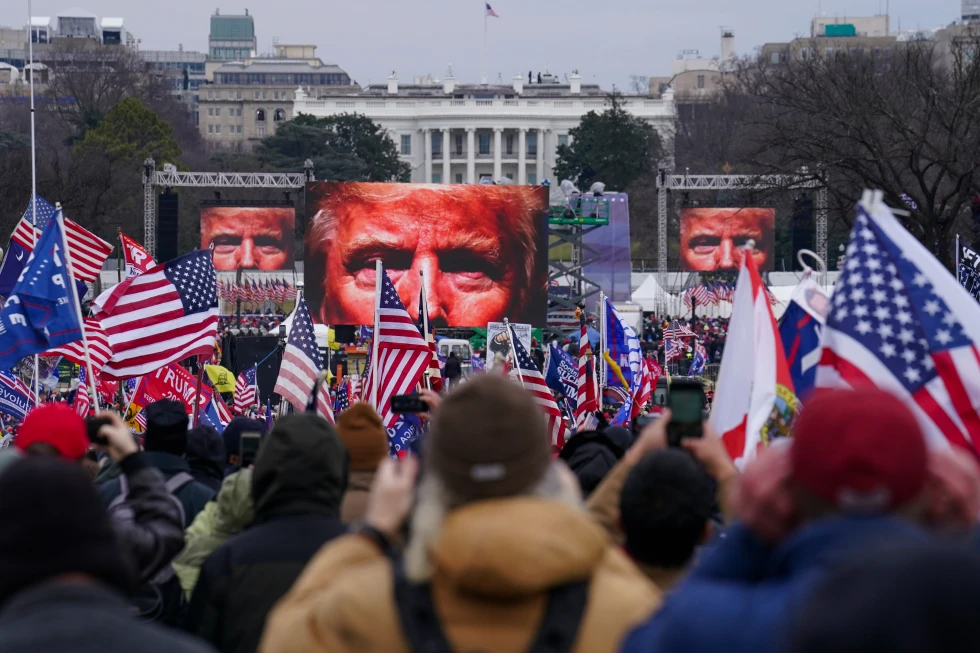
DENVER — Since Donald Trump lost his bid for reelection in 2020, he has consistently claimed that the election was plagued by widespread fraud. Over five years later, these assertions persist as Trump, now president again, pressures the federal government to support his baseless claims.
On Wednesday, the FBI executed a search warrant at the election headquarters in Fulton County, Georgia, seeking ballots from the controversial 2020 election. This move followed Trump's recent comments at the World Economic Forum in Davos, suggesting that formal charges related to the election were forthcoming.
Legal experts have pointed out that Trump’s obsession not only reflects a personal fixation but also poses significant implications for the governance structure, as he seemingly transforms federal resources into tools for personal agendas. Rick Hasen, a law professor at UCLA, remarked, The man has obsessions… but he’s the only one who has the full power of the United States behind him.”
Sen. Jon Ossoff of Georgia has drawn parallels between Trump’s actions and past federal overreaches, warning about a president “spiraling out of control, wielding federal law enforcement as an unaccountable instrument of personal power and revenge.”
With election officials across the U.S. ramping up for the 2026 midterms, concerns mount that Trump may be laying the groundwork for future interventions that threaten local electoral integrity. Kristin Nabers from the organization All Voting Is Local stated, “If they can get away with taking election materials here, what’s to stop them from taking election materials or machines from some other state after they lose?”
Georgia, in particular, remains at the epicenter of Trump’s post-election narrative, with his infamous phone call to Secretary of State Brad Raffensperger urging him to find more votes. Multiple reviews have consistently affirmed Joe Biden’s win in the state, despite Trump’s relentless claims of fraud. Trump's attempts to challenge the election results through various channels, including court actions, have met with consistent legal failures.
The larger electoral crisis, amplified by Trump's persistent rhetoric, raises alarms about potential ramifications for the upcoming electoral landscape. Political strategists and former election officials like David Becker express concern that Trump’s rhetoric is less about pursuing justice and more about influencing perceptions ahead of the 2026 elections.
In light of these developments, many are left to ponder what the implications are for democracy in the United States if the powers of the federal government continue to intertwine with personal political ambitions. The outcome of this ongoing saga may reshape not only the immediate political landscape but also the very foundations of electoral integrity in the nation.