In brief
Starlink, the high‑speed satellite internet launched by SpaceX, has become the backbone of Ukraine’s battlefield communications and drone operations. A sudden 100‑mph speed limit imposed on drones using Starlink has severely weakened Ukrainian intercepts of fast Russian Shahed drones, prompting concerns over the strategic use of space assets in modern conflict. Ukrainian officials claim the restriction was unannounced and suspect political motives, while SpaceX denies control over military use. The incident underscores the vital role of satellite tech for real‑time decision making in war, and the tensions it can create with geopolitical allies.
Starlink satellites operated by Elon Musk's SpaceX provide high‑speed internet — something modern war relies heavily on.
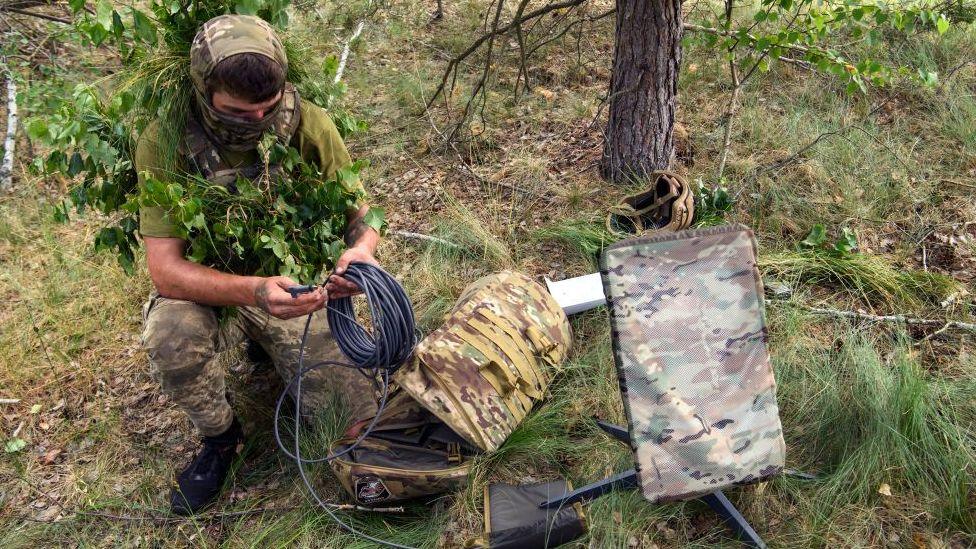
Kyiv has adopted it as a vital battlefield communications tool and also uses it in drone warfare.
Using Starlink, Ukrainian drones are able to maintain stronger connections with operators over longer distances than conventional radio networks and are less vulnerable to jamming.
But a sudden speed restriction for drones connected to Starlink means some battlefield "missions" have been disrupted, according to a top Ukrainian official.
Serhiy Beskrestnov also said officials had not been told about the 100mph (160km/h) speed limits set overnight on Tuesday by Elon Musk's SpaceX company.
Throttling drones connected to the network at this relatively low speed makes Ukrainian efforts to intercept jet‑powered Russian drones all but useless, the Institute for the Study of War (ISW) said.
Starlink is "the backbone of military communications in Ukraine", the institute's George Barros says, and is used across Kyiv's naval, land, and air forces.
Barros, the ISW's Director of Innovation and Open Source Tradecraft, told the BBC the restrictions could have major implications as the technology allows "drones, artillery and command posts to function as a single real‑time network where the time between sensor‑to‑shooter is minimised."
Starlink does not work inside Russia, but Ukrainian drones can use the satellites to communicate back to their operators during strikes. There is no ready replacement for the network.
Starlink-enabled interceptors are also among Ukraine's most effective solutions against jet‑powered Russian Shahed drones, he said.
Shaheds fly at speeds in excess of 198mph, meaning SpaceX's restriction makes Ukrainian efforts to chase them down all but impossible.
Tom Whittington, electronic warfare expert and associate fellow at RUSI, told BBC Radio 4's PM programme that the satellite system allows Ukraine to move large amounts of data — like video, text and voice calls — in a similar way that smartphones do but without the infrastructure that phones need.
The speed restrictions "effectively preclude" anything connected to the network going above 100mph, Whittington said, making drone navigation difficult within Ukraine and Russian‑occupied territory inside Ukraine.
Serhiy Beskrestnov - Zelensky's adviser - says he believes the restrictions are not a coincidence and are related to the latest strains between Kyiv and Washington.
President Trump has criticised Ukraine's long‑range strikes on Russian oil refineries and called for a new leader — criticisms which have been echoed by Elon Musk.
Ukraine's complaint about the restrictions has drawn attention to both Starlink, and Starshield — a military‑grade version of the network developed for the Pentagon by SpaceX.
Musk says the two systems are separate, but in many cases they share the same underlying satellite technology.
And in a post on X, Musk suggested the US government could be responsible for the slowdown afflicting Ukrainian usage of the technology.
"Starshield systems are owned and controlled by the US government," he wrote. "Any limits on speed or usage are decided by the US military and ultimately POTUS."
"Starlink is a commercial service owned and controlled by SpaceX. Usage of Starlink is limited to civilian or defensive activities and cannot be used for offensive military action, as doing so would be inappropriate for a commercial company."
Russian President Vladimir Putin launched a full‑scale invasion of Ukraine in 2022, and Moscow currently controls about 20% of Ukrainian territory.
SpaceX's satellite communications have proved vital to both armies during the four‑year war, including a Russian attack on a moving passenger train, but earlier this year Musk cut the use of Starlink terminals for Russian forces in a move that blunted Moscow's advance and caused confusion among Russian commanders.