In brief
Spanish intelligence services warned Moroccan and Ceuta officials on 29 July that social media groups were planning a mass migrant crossing into Ceuta the following day. Newly released documents show that on 30 July, at least 72,000 migrants swam over a border fence, with about 100 deaths reported. The influx followed earlier intelligence that identified thousands of WhatsApp and Facebook users being urged to cross during a national celebration. Spanish Prime Minister Pedro Sánchez denied any foreknowledge, but opposition parties cited the documents as evidence of government mismanagement. The crisis has led to unrest in Ceuta, with locals blocking aid and destroying temporary shelters for those who remained.
According to freshly declassified Spanish intelligence documents, authorities were warned on 29 July that social‑media groups were mobilising migrants to cross into Ceuta the next day.
These revelations emerged in documents released by the Spanish government amid allegations that the state had failed to fully disclose the scale of the crisis.
On 30 July, at least 72,000 people crossed from Morocco into Ceuta, most swimming around a border fence, and official sources report that around 100 migrant deaths were recorded during the operation.
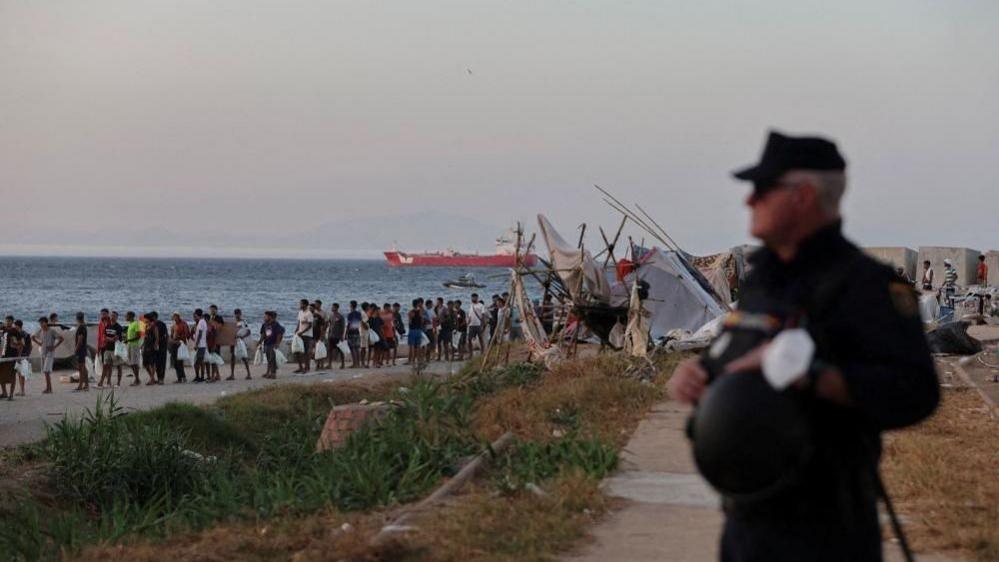
Although many escaped back to Morocco, up to 5,000 remain in makeshift camps or sleeping on city streets and beaches, causing unrest in the autonomous Spanish city on North Africa’s shores.
Local residents have voiced security concerns and have at times destroyed temporary shelters and blocked aid deliveries from Red Cross and other NGOs.
In a note dated 29 July, the National Intelligence Service (CNI) informed Moroccan intelligence that it had identified WhatsApp and Facebook groups urging migrants to exploit the “Throne Day” celebrations to cross the barrier.
The CNI estimated that roughly 180,000 people were exposed to the message, which read, “Whoever wants to cross has the last chance on Throne Day [30 July] at 8 am as the authorities will be distracted with celebrations and parades.”
The intelligence agency also warned the central government’s representation in Ceuta and the civil guard about the social‑media activity via text messages.
These documents are part of a broader tranche of more than 40 security files tied to the Ceuta crossing that the government declassified following mounting criticism of Prime Minister Pedro Sánchez’s handling of the situation and accusations that Morocco facilitated the movements.
Earlier this month, a leaked Spanish police report appeared to implicate Moroccan police in the incident, though Sánchez has maintained there is no evidence of Moroccan complicity.
On the day the documents were released, Sánchez told Spanish television that the mass arrival was “not expected.”
Opposition parties argue that the newly released material directly contradicts that statement, suggesting that “they had the information, and they are directly responsible for the influx and the deaths.”
Foreign Minister José Manuel Albares said he was not aware of any pre‑emptive reports that might foresee the magnitude of what happened on July 30.
A government source noted that the published documents demonstrate that information available before the mass crossing did not enable the authorities to anticipate the scale of the crisis or adequately prepare a timely response.
Central government delegate Miguel Ángel Pérez Triano explained that the WhatsApp messages from July 29 did “not constitute an alert or a report” but merely represented an exchange of information.