In brief
The outbreak of African Swine Fever in Spain threatens the vibrant pork industry, causing severe market disruptions and financial losses for farmers. While authorities work on containment and biosecurity measures, the economic implications are substantial as international markets impose bans on Spanish pork exports.
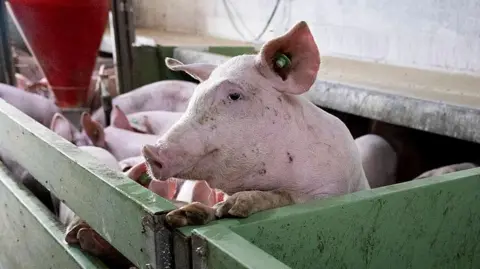
Jordi Saltiveri gazes across his farmland, on which he keeps 8,000 pigs, and remembers the day late last year when the news emerged that African Swine Fever (ASF) had been detected in Spain.
I felt sad, angry, impotent, he says. Once it's known that a country is positive for ASF, other countries will stop importing its pork.
Saltiveri's farm, owned by his father and grandfather before him, is in an isolated spot in the province of Lleida, in the northeastern region of Catalonia.
An old Catalan independence flag hanging by its entrance flaps in the wind, and the sound of pigs grunting and squealing in the farm buildings can be heard in the distance.
The outbreak of the virus remains relatively contained and it has not reached this area. Even so, Saltiveri, who is president of the federation of farming cooperatives in Catalonia, and almost every other pork farmer in Spain, is feeling its impact.
Each pig we sell for slaughter has lost about €30 [$35; £26] to €40 of its value compared to before the outbreak, he says. I'm worried because we're suffering big losses.
ASF is highly contagious and lethal for pigs and wild boars, but it does not affect humans. Ground zero for this outbreak is Collserola Park, a nature area on the edge of Barcelona, where the corpse of a wild boar infected by the virus was discovered in late November.
The authorities moved quickly to shut down the park, restricting access to the area, while searching for more infected corpses. The exact cause of the outbreak is still unclear, and an initial investigation has ruled out a possible leak from an animal research facility located near the first boar to be found infected.
However, the thousands of wild boar that roam the area have been identified as a key factor behind the spread of ASF. Being too permissive with wild animals has led to an overpopulation of rabbits, deer and wild boar, says Òscar Ordeig, the minister for agriculture, fisheries and food in the regional government of Catalonia.
Wild boar, he tells the BBC, have become a particular problem, causing a huge increase in traffic accidents and transmission of diseases.
Ordeig estimates that the entire Catalonia region contains between 120,000 and 180,000 boars. The local government's aim is to cut that population by half, and 24,000 animals have been culled so far this year.
The police officers leading the cull are focusing on a 6km radius surrounding the first cases. Culling is carried out using nets and silenced firearms, with drones monitoring their movement.
Despite long-standing mandatory biosecurity measures, concerns remain as wild boar tested positive outside high-risk zones in February.
The outbreak has now impacted demand and price; pork exports from Catalonia were down 17% in January compared to the previous year. Export restrictions have cost the Spanish pork industry more than €600m since the crisis began.
Concerns linger about the long-term implications for the industry. Farmers like Saltiveri stress the importance of using resources to defend the sector, but confidence is shaken given the return to market stability may take over a year post-eradication.
While international markets have ceased to import pork from Spain after the discovery of ASF, domestic consumption remains stable, with shoppers in cities like Barcelona expressing confidence in the safety measures taken during the outbreak.
As the authorities take action to contain the outbreak, Spain looks toward Belgium as an example of how to effectively manage and eliminate ASF before it has further devastating effects on the industry.