In brief
With 12,800 quakes detected since late January, Santorini and neighboring islands are grappling with heightened seismic activity, forcing evacuations and state of emergency measures.
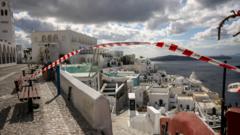
In an alarming turn of events, Santorini has experienced its most powerful earthquake yet, registering a magnitude of 5.3. Occurring on Monday evening, this quake is the latest in a series of tremors that have plagued the island and its surroundings for the past two weeks. The shallow quake struck at a depth of 17 km (10.6 miles) and was felt as far away as Athens, prompting heightened concern among residents and local authorities.Following a moderate quake of 5.0 magnitude the previous evening, the beautiful tourist destination has been under a state of emergency since seismic activity escalated on January 26. The University of Athens' Seismological Laboratory has detected over 12,800 tremors in this timeframe, a seismic crisis that has left many residents on edge. Local patrols have formed as a precaution to keep tourists safe from the potentially dangerous cliffs, which have become increasingly unstable due to frequent landslides.While no significant damage or injuries have been reported, more than 11,000 people have fled the islands for safety. Schools across Santorini, Amorgos, and several other islands have closed, reflecting local authorities' ongoing concerns. A rescue team from Greece's Special Disaster Response Unit has been dispatched to Amorgos, equipped with specialized gear to assist in seismic monitoring.Seismologists, including Kostas Papazachos from the Aristotle University of Thessaloniki, remain cautiously optimistic, noting that while there's a possibility of a major earthquake, there may be a gradual de-escalation in tremors. Greek authorities have attributed the recent quakes to movements in tectonic plates rather than volcanic activity, navigating Santorini's location on the Hellenic Volcanic Arc.In addition, the cruise ship Viking Star, originally scheduled to dock in Santorini, has modified its route to avoid complications caused by the ongoing seismic crisis, choosing instead to anchor in Crete. With scientists unable to predict the timing and intensity of future earthquakes, residents and visitors alike are left to navigate an uncertain situation.