In brief
A commercial bus crash in Virginia that killed five people and injured dozens raises questions about driver practices, company safety culture, and regulatory enforcement. The incident underscores how inadequate safety measures in buses—critical for low‑emission public transport—can undermine progress toward sustainable mobility.
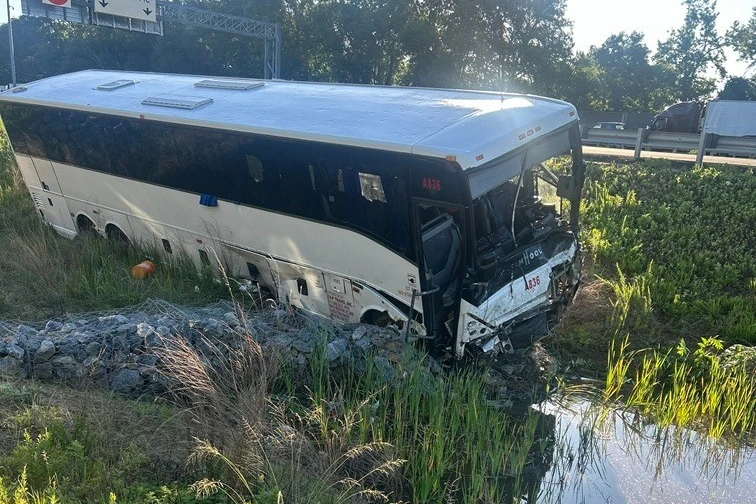
Last week’s fatal bus collision in Virginia, which claimed five lives and left dozens injured, almost as quickly as it happened, snapped the public’s focus onto the safety protocols that underpin America’s quest for low‑carbon, mass transit. Commercial buses are a backbone of sustainable transport, carrying millions of people every year while emitting far less per capita than cars. When these vehicles fail, the loss is not only human but also environmental.
The National Transportation Safety Board (NTSB) is still in the early stages of investigating the crash, but the scene already points to long‑standing deficiencies. Unlike many modern cars, most commercial buses lack advanced collision‑avoidance technology and emergency braking systems that the NTSB has repeatedly recommended over the past decade. This gap means that when a bus or semi‑truck crashes into other vehicles, the impact is disastrous.
Driver fatigue has been highlighted by experts. The bus, operating overnight from New York to North Carolina, struck a traffic‑control vehicle at 2:30 a.m., approximately five hours into the trip. Federal law limits buses to ten hours of driving or fifteen hours of duty without at least eight hours of rest, and electronic logs are used to enforce these limits. Yet records show that the driver, Jing Sheng Dong, has been cited for speed violations in Virginia and Maryland within a short span, raising concerns about whether he had rested adequately on that night.
Companies like E&P Travel Inc., which employed the driver, face scrutiny over their hiring and training practices. The company’s driver roster includes others with a history of traffic violations, most recently a similar crash in North Carolina where a driver failed to reduce speed around a temporary traffic block. These patterns suggest systemic management failures rather than isolated incidents.
Industry leaders argue that the responsibility lies primarily with the operators. Fred Ferguson, head of the American Bus Association, says that “driver-monitoring technology—such as inward-facing cameras and telematics—has become standard, and many firms install collision‑avoidance systems precisely to prevent catastrophic accidents and safeguard the company.” Nevertheless, cost remains a barrier. A new motorcoach can exceed $650,000, and tariffs and maintenance costs further strain budgets.
Regulatory bodies have lagged in turning NTSB recommendations into enforceable standards. For example, although buses have had seat‑belt requirements only since 2016, and collision‑avoidance mandates surfaced in 2023, the rules remain pending. The NTSB notes that the commission’s recommendations are advisory and often rejected due to perceived financial burdens.
In 2024, the Department of Transportation’s Motor Carrier Safety Administration confirmed that Jing Sheng Dong’s commercial driver’s license was issued following New York’s standard vetting process. Secretary Sean Duffy has pushed for stricter licensing enforcement—though primarily focused on truck drivers—and is continuing to investigate whether New York’s regulations were fully complied with in this case.
As the nation works to reduce transportation emissions, ensuring that the vehicles delivering that progress are safe is paramount. Failure to do so not only costs lives but can erode public trust in green transport solutions.
For readers who want to dive deeper, the NTSB’s official filing and court documents are available online, and the American Bus Association regularly publishes safety guidelines that highlight best practices for driver training, fatigue management, and vehicle technology.
}