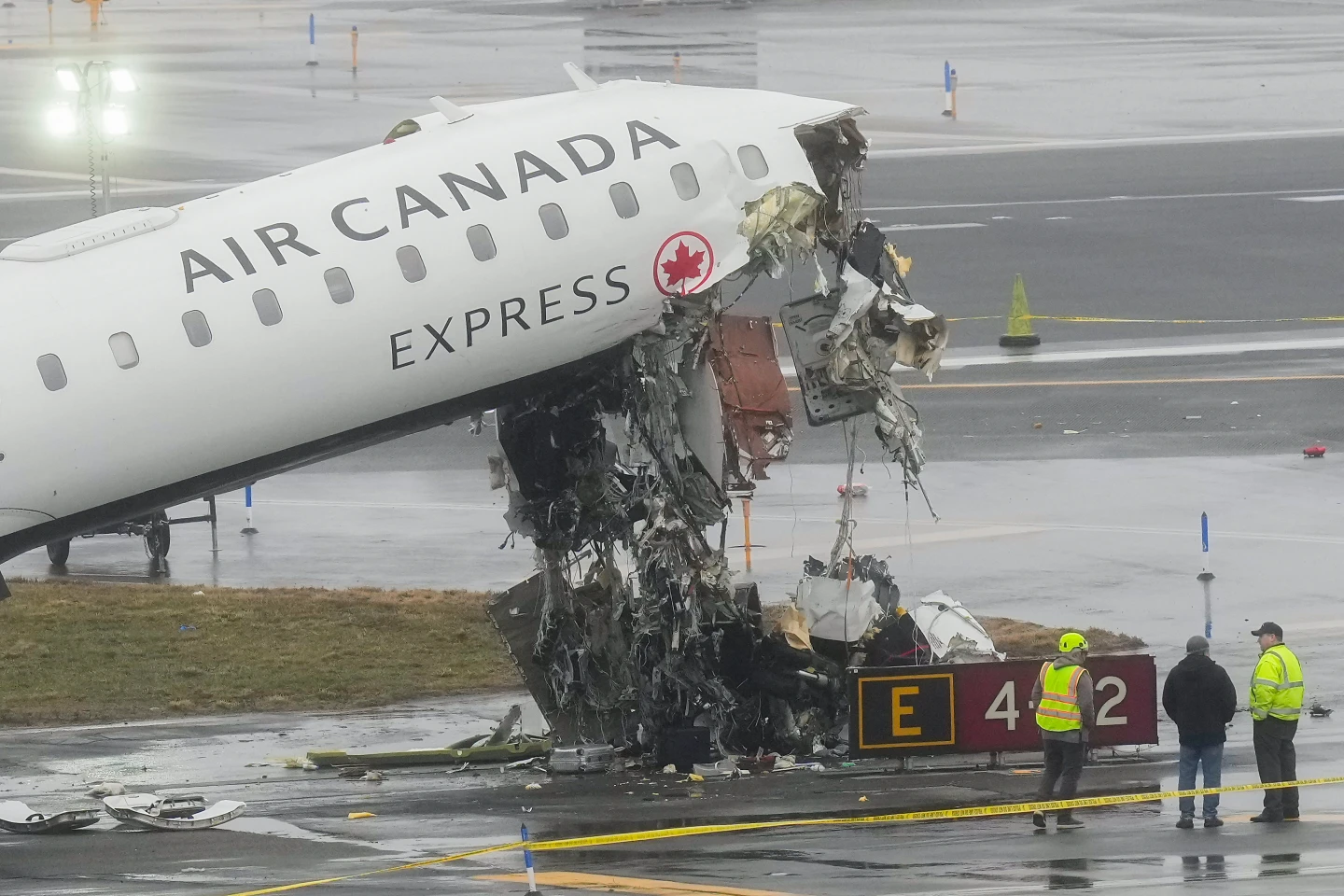
NEW YORK (AP) — An investigation revealed alarming details regarding a deadly collision on March 22 between an Air Canada jet and a fire truck on a LaGuardia Airport runway, resulting in the tragic deaths of both pilots. A preliminary report from the National Transportation Safety Board (NTSB) indicated that an air traffic controller warned 'stop, stop, stop' but the driver of the fire truck had not understood who the warning was directed at.
According to the report, a crash prevention system failed to generate audible alerts in the control tower, and the runway entrance lights that signal traffic to stop remained illuminated until just three seconds prior to the crash.
After receiving the initial warning, the turret operator in the fire truck realized that the controller was addressing them only when they were already on the runway, as Air Canada Express Flight 8646 was landing at alarming speed. The operator noted seeing the airplane’s lights just moments before the catastrophic collision.
The fire truck was part of an emergency response convoy acting on a report of a strong odor from a United Airlines jet. The collision claimed the lives of pilots Antoine Forest, 24, and Mackenzie Gunther, 30, and injured approximately 40 others, including the crew members in the fire truck. A flight attendant from the Air Canada flight survived by being ejected from her seat into the tarmac.
This incident is particularly troubling as it marks the first deadly crash at LaGuardia Airport in 34 years. Investigators noted that the busier-than-usual situation at the control tower exacerbated the risk, as flight delays led to increased traffic during peak hours.
The lack of a transponder on the fire truck contributed to the failure of the ASDE-X system meant to prevent runway incursions, underscoring the urgent need for improvements in aeronautical safety systems. As detailed, the air traffic control clearance for the truck and the subsequent tragic warnings were a combination of critical errors that led to this devastating accident.