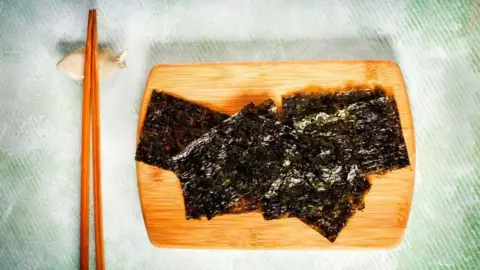
Black, crispy, often flat and square - dried seaweed, known locally as gim - is a humble staple on everyday dining tables across South Korea. But as its global popularity grows, its rising prices are worrying gim-lovers nationwide.
Lee Hyang-ran has been selling gim for the past 47 years. In the past, people from Western countries thought Koreans were eating something weird that looks like a piece of black paper, she recalls from her stall in central Seoul. I never thought I'd be selling gim to them. But now, they all come here and buy it.
As the world's largest producer and exporter of gim, South Korea supplies markets across Asia, North America, and Europe. The product has been likened to Korea's black semiconductor due to its rising significance in the global market. In 2025, South Korea's dried seaweed exports reached a record $1.13 billion, with demand continuing to increase, driving prices higher.
Last year, a single sheet of gim typically cost around 100 won (about $0.06), but prices have recently climbed to record levels, surpassing 150 won per sheet, especially for premium products, which have reached as much as 350 won. This rise has sparked concern among consumers who regard gim as an affordable daily snack.
The global appetite for gim is fueled by cultural phenomena such as K-pop and K-dramas, which have piqued interest in Korean cuisine. The launch of Trader Joe's Gimbap—Korean rice rolls wrapped in seaweed—went viral in 2023, clearing shelves almost instantly.
Increasing familiarity with gim is seen from consumers worldwide, with rising sales pushing up domestic prices to meet international demand. Experts assert that the combination of inflation, escalating labor costs, and a decrease in overseas production have compounded the price increases, prompting companies and the government to seek solutions such as monitoring prices and investing in seaweed research and development centers.
Despite these challenges, the market for gim remains robust in Seoul, where vendors like Lee report booming business and heightened interest in gim. The evolution of this once-humble staple into a global commodity illustrates the fluctuations of cultural influence, consumer demand, and economic variables in today's interconnected world.