In brief
India's Commerce Secretary confirmed that the long-awaited trade deal with the EU is finalized, coinciding with high-level visits from European leaders. The agreement is anticipated to enhance market access and ease trade regulations amid ongoing global trade tensions, particularly with the US. Both regions seek to strengthen their economic partnerships, sending a clear message against rising protectionism.
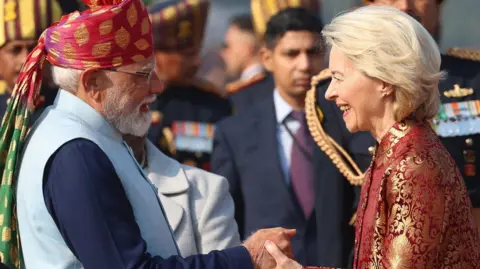
The European Union and India are poised to announce a landmark trade deal after nearly two decades of intermittent discussions. Commerce Secretary Rajesh Agarwal announced on Monday that negotiations have been completed, paving the way for the impending announcement with European Commission President Ursula von der Leyen and European Council President António Costa present in Delhi.
This agreement comes at a crucial time as both India and the EU are looking to bolster their strategic and trade relationships amidst mounting economic and geopolitical tensions with the United States. The situation has been exacerbated by high tariffs imposed by President Trump, which have prompted India to seek alternative trade arrangements.
This trade deal is projected to send an important political message highlighting the commitment of both parties towards trade agreements rather than tariffs, as global protectionism continues to rise.
Throughout their visit, von der Leyen and Costa attended India's Republic Day celebrations and are scheduled to meet Prime Minister Narendra Modi for a bilateral summit to formally announce the deal.
Once finalized, the agreement will open Indian markets to European businesses, specifically easing restrictions on automobile imports and agricultural goods, while fostering greater access for Indian exports into Europe. This represents a significant step for both economies, accounting for approximately 25% of the global GDP.
With the EU already being India's largest trading partner, bilateral trade value reached $136 billion in 2024-25, nearly doubling over the past decade. Both parties had previously encountered hurdles, primarily centered on mutual access to markets and regulatory standards, stalling talks until they resumed in July 2022.
This deal is indicative of a larger trend where India has also been securing trade agreements with countries like the UK, Oman, and New Zealand while the EU has recently concluded arrangements with the South Asian trade bloc, Merosur. Such moves highlight the increasingly interconnected global trade landscape as nations navigate complex economic challenges.