Trade tensions and a reversal in the artificial intelligence (AI) boom are among the main risks to global economic growth, the International Monetary Fund (IMF) has warned.
The IMF's latest world economic outlook described the global economy as 'steady', with growth expected to remain 'resilient' this year.
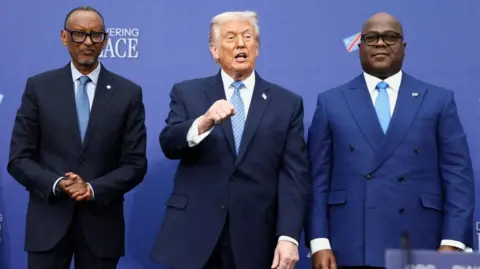
This forecast precedes a recent statement from Donald Trump threatening tariffs against eight European nations opposing his proposed Greenland takeover.
Moreover, the IMF stressed that the independence of central banks is 'paramount' for global economic stability and growth.
The economic watchdog projected global growth to reach 3.3% this year, an increase from a previous estimate of 3.1%, but slowing slightly to 3.2% in 2027. IMF chief economist Pierre Olivier Gourinchas remarked on the resilience of the global economy, stating it has been able to 'shake off the trade disruptions of 2025.'
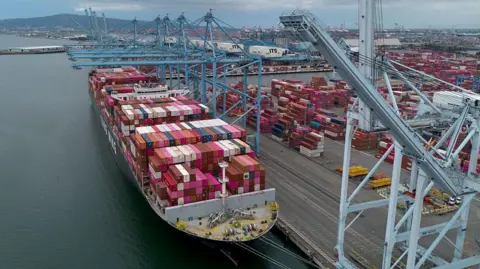
Despite Trump’s tariffs slowing global activities, Gourinchas pointed out that factors offsetting these impacts have emerged.
The IMF notes that global growth has benefited from 'tailwinds from surging investment related to technology', especially in the AI sector. However, the report warns that if AI growth expectations are overly optimistic, an abrupt market correction could occur.
Such market adjustments can significantly impact people’s wealth relative to their income, affecting overall consumption and investment plans. The IMF also identified escalating trade tensions as a potential catalyst for prolonged uncertainty, which could strain economic activity.
Additionally, dangers stemming from political and geopolitical tensions may disrupt financial markets, supply chains, and commodity prices.
On UK growth projections, the IMF estimates a 1.4% increase for 2025, with forecasts for this year remaining steady at 1.3%, making it the third-fastest growing economy in the G7.
Central bank independence was also emphasized by the IMF, which warned against fiscal dominance and the ramifications of compromised autonomy on inflation expectations and economic mandates.
The report draws attention to a recent investigation into US Federal Reserve chair Jerome Powell, amplifying concerns regarding political influences on central banking.