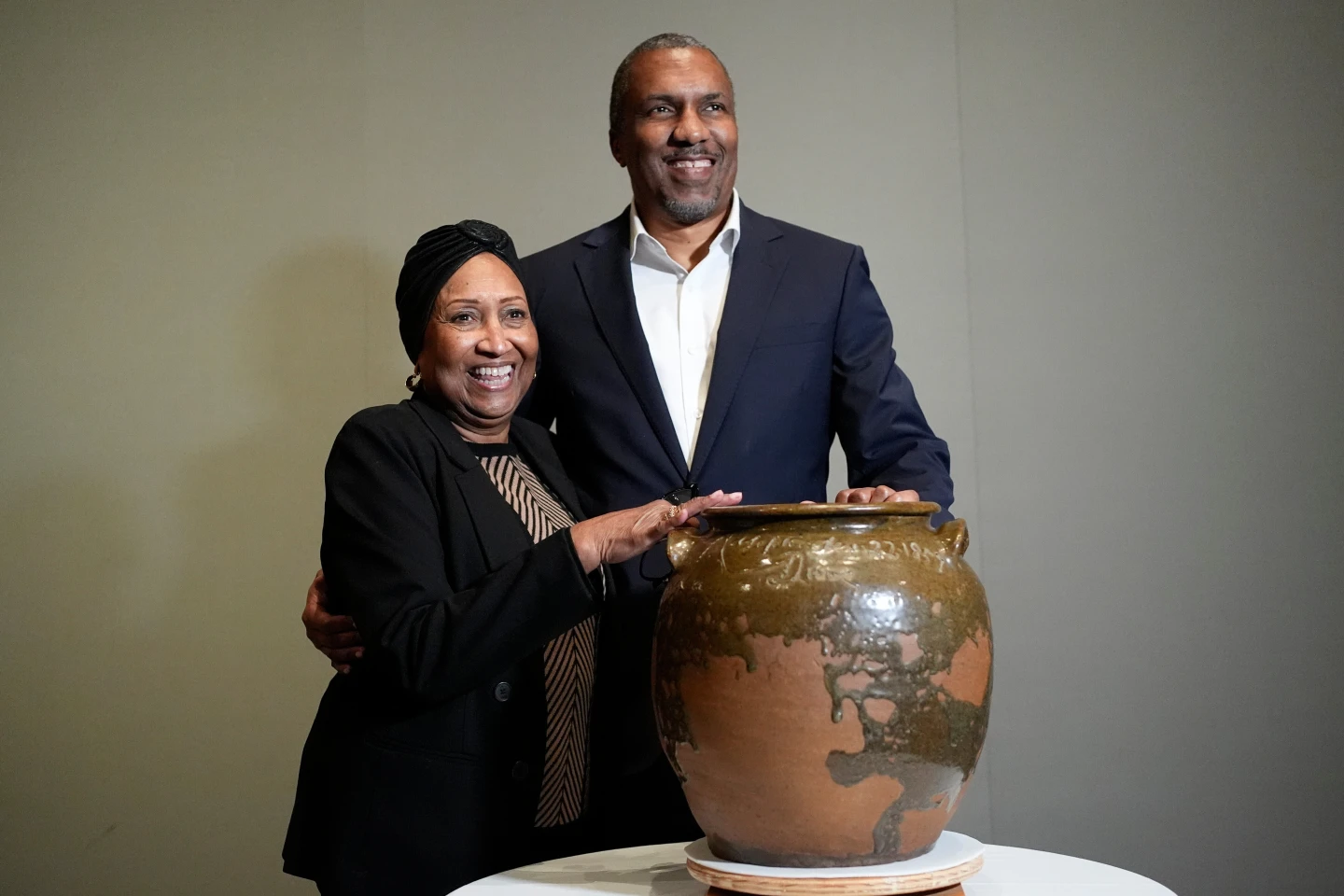
BOSTON (EchoSphere News) — Inside the wide mouth of a stoneware jar, Daisy Whitner’s fingertips found a slight rise in the clay — a mark she hoped was a trace left behind by her ancestor, an enslaved potter, David Drake, who shaped the vessel nearly 175 years ago in South Carolina.
Standing in the gallery of the Museum of Fine Arts in Boston, Whitner, aged 86, spoke of the connection she felt on that day. Inside this jar, I’m sure I’m feeling his tears, sweat drops off his face, his arms, she expressed, highlighting the emotional resonance of her ancestor's artistry.
This jar is one of two returned to Drake’s family as part of a pioneering agreement this month between Drake’s descendants and the MFA Boston, one of the institutions holding pieces of his work. This event represents a monumental chapter in the narrative of art restitution in the U.S., marking the first significant case focusing on artworks created by an enslaved individual.
The jars, created by Drake, a man who uniquely inscribed his creations with poetry—a bold claim of identity during an era of severe oppression—are a testament to his legacy. His works had been tightly bound to a painful history where tracking the ownership of such items is often impossible, but the recent agreement embodies a pivotal moment in the fight for acknowledgment.
Children’s book author Yaba Baker, a fourth-generation grandson of Drake, reflects on this restitution, calling it a spiritual restoration. His family feels a dual sense of pride and grief as they reclaim a piece of their heritage. We want people to know that this person, Dave the Potter, who was told he was nothing but a tool, realized he had humanity. He deserved his own name on his pots, Baker articulated.
This agreement brings with it challenges that many Black families face when they try to trace their ancestry before the legacy of slavery—a daunting task often riddled with loss. Drake’s artistic expressions weave a narrative of struggle, resilience, and a profound longing for belonging.
The elder Baker stated, Each time I slid my hand inside the jar, I felt my ancestor’s presence. The outside is beautiful, but when you think about what he went through, it is heartbreaking. He worked so hard for nothing. The transformative nature of this agreement shines a new light on the often-overlooked intersection of art, identity, and historical justice.