In brief
During a live interaction, BBC Russia Editor Steve Rosenberg confronted Vladimir Putin about Russia's trajectory and its years of grievances with the West. In a series of pointed questions, Rosenberg highlighted issues around Russia's repressive laws and the ongoing war in Ukraine. Putin responded by suggesting that hostility could cease if Russia's security concerns were respected, indicating a willingness for dialogue. However, doubts linger as European leaders remain skeptical about Russia's intentions amidst claims of ongoing aggressions.
Reporters ask world leaders questions all the time. No big deal. Right?
But what's it like putting a question to Vladimir Putin - the president who ordered the full-scale invasion of Ukraine, the leader whose country was accused this week by the head of MI6 of 'the export of chaos'?
And imagine asking that question live on TV while millions of Russians are watching.
It's a big responsibility. You don't want to mess up.
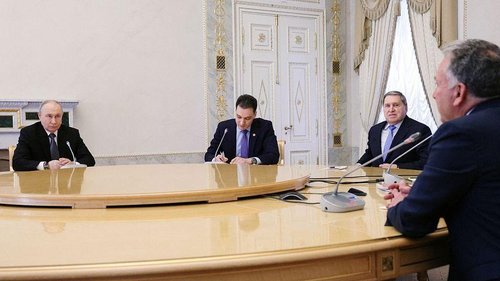
My question is about Russia's future. What kind of future are you planning for your country and your people? I ask President Putin.
While I'm speaking, Vladimir Putin is making notes. And then replies.
He defends Russia's repressive foreign agent law. Hundreds of Russians who are critical of the authorities have been designated foreign agents.
In reality, the Russian law is draconian. It excludes foreign agents from many aspects of public life, including teaching, the civil service, elections and public events. It imposes financial and property restrictions. Criminal prosecution can follow a single administrative fine.
However, I'm unable to point this out to President Putin. The microphone was taken away from me after I'd finished my question.
Suddenly the moderator intervenes to change the subject.
Putin returns to my question: Will there be new special military operations? There won't be, if you treat us with respect, and respect our interests, just as we've always tried to do with you. Unless you cheat us, like you did with Nato's eastward expansion.
Visible for all to see is what is driving Vladimir Putin - a deep-seated resentment of the West.
But as he finished answering my question, was this an olive branch to Europe from Russia's president?
We're ready to cease hostilities immediately provided that Russia's medium- and long-term security is ensured, and we are ready to co-operate with you.
However, if Moscow continues to connect its long-term security to its maximalist demands over Ukraine, European leaders will remain sceptical.