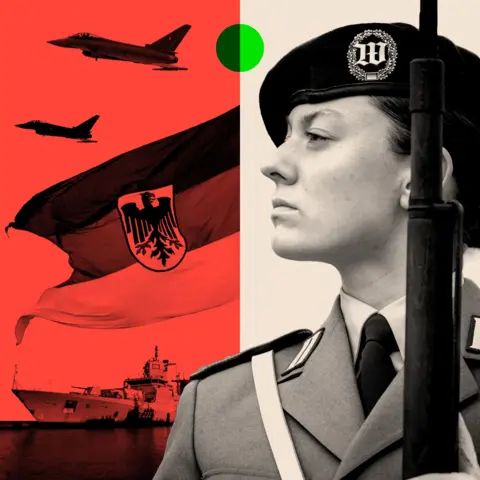
General Carsten Breuer is a man in a hurry. As head of Germany's armed forces, he is tasked with the rapid expansion of the military in response to Russia's increasing military capabilities and ambitions. Breuer warns that by 2029, Russia could be equipped to invade NATO territory, prompting Germany to become Europe's most formidable military power.
With a military budget set to reach €162 billion by 2029, significantly up from €95 billion in 2025, public support for military spending is strong, marking a historical departure from Germany's post-war peace-oriented policies.
This rearmament has deep cultural implications for a nation that has, for decades, grappling with its militaristic past. The presence of nearly 5,000 German troops in Lithuania signifies a new era of German military engagement and demonstrates a commitment to NATO.
The focus on building a powerful conventional army underlines the shift from relying heavily on US support to pursuing greater operational independence. Echoing a broader European reassessment of defense priorities, Germany's military strategy aims to deter threats while fostering cooperation within NATO and the European Union.
Breuer's leadership reflects a significant transformation in Germany's defense posture, with plans for a professional army and reserve force to ensure national security. This change signals both a response to historical challenges and recognition of new geopolitical realities, positioning Germany as a key player in European defense in the years to come.