In brief
The P39-1 highway in South Africa has gained international attention after President Trump's claims of a "burial site" for murdered Afrikaners, which local residents refute as a temporary memorial for a farming couple. This incident underscores ongoing racial tensions and public safety issues in the country.
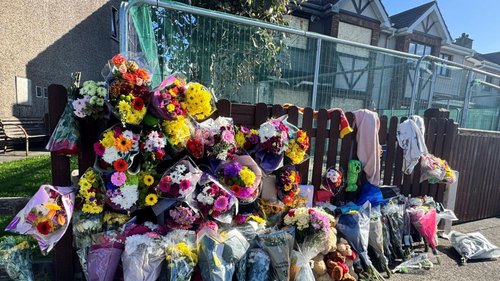
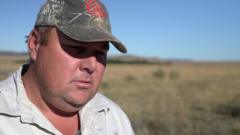
The P39-1, a modest highway linking the towns of Newcastle and Normandein in South Africa, has unexpectedly garnered global attention following President Donald Trump’s characterization of the site in a video claim on apartheid-era persecution of white people. Trump's video, aired Tuesday, depicts thousands of white crosses along the roadside, which he asserts are markers of a "burial site" for victims of a supposed genocide against Afrikaners. However, upon closer examination by the BBC only a day later, it became clear that these crosses had been temporarily erected in memory of Roland Collyer's aunt and uncle, Glen and Vida Rafferty, who were brutally murdered on their farm in 2020. The crosses served as a memorial, meant to draw attention to farm-related violence in South Africa, and had since been removed. Collyer explained the community’s symbol of mourning was misconstrued by Trump. Neighbor Rob Hoatson supported this, clarifying, "It was a memorial… not a permanent installation." Both men express valid fears regarding safety in the region, which struggles with one of the world’s highest murder rates—over 26,000 killings recorded last year, predominantly affecting black communities.In the legal aftermath of the Raffertys’ murders, two men were convicted, providing a rare resolution amid much unresolved violence. Local residents describe a community dynamic primarily based on cooperation despite historical frictions—many emphasizing their desire for mutual understanding and progress regardless of racial backgrounds.Community member Bethuel Mabaso remarked on the peace in the area, completely opposing Trump's alarming portrayal of violence. While Trump’s claims regarding asylum offers for Afrikaners reflect his political stances, it also opens dialogues about safety and future for farmers in South Africa. Collyer asserts he has no plans to leave, recalling the deep legacy of his family in South Africa, citing a shared aspiration for unity among residents. In the face of complex racial dynamics, evident in historical grievances and modern dialogues, locals remain hopeful for reconciliation and improved relations, showcasing resilience amid adversity within South Africa.