In brief
Farmers in the Northeast are struggling with sudden temperature swings following a period of unusually warm weather. Crops, including peaches and flowers, are either blooming prematurely or facing potential losses due to frost. Experts note that farmers are increasingly needing to adapt their practices to deal with unpredictable climate conditions.
BRIDPORT, Vt. — Recent weather fluctuations in the Northeast have created a challenging scenario for farmers, who are grappling with the fallout from a sudden drop in temperatures following an early warm spell. Some growers found themselves forced to either harvest their flowers prematurely or face the risk of losing significant parts of their crops.
While frosty nights are typical for this time of year, the average date for the last frost in the region ranges from mid-April to early June. The high temperatures experienced across the region earlier in April, alongside a rapid cooling, have raised concerns among fruit and flower growers.
In parts of New England, temperatures surged into the 80s (roughly 27°C) before plummeting to the low 20s (-5°C), creating an unusual situation that has left some farmers, like Anne Joudrey of Apple Hill Orchards in Ohio, worried. Joudrey reported that the sudden cold ruined a large portion of her peach crop.
Farming is farming, and you never know what you’re gonna get, but we had a pretty good bloom, so we were expecting a pretty good crop, Joudrey expressed on Monday.
Despite these setbacks, some crops, like apples, appeared to be weathering the storm better than others, thanks to effective planting strategies that allow cold air to drain away.
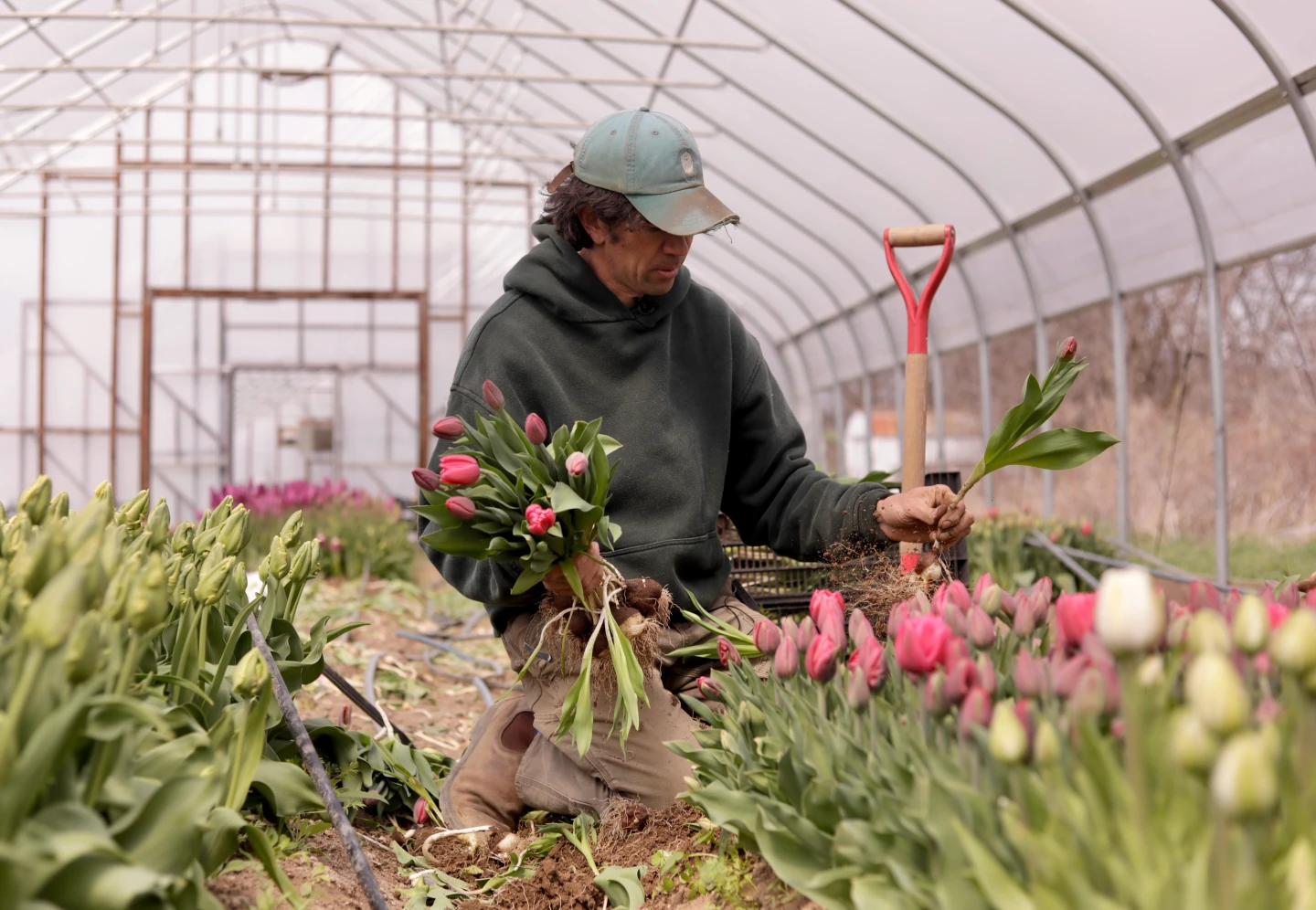
In Vermont, Gregory Witscher of Understory Farm noted that the fluctuation in temperature affected his cut flower operations significantly. Tulips, initially slated for harvest by Mother’s Day, bloomed much earlier than anticipated, leading him to harvest all at once and store them appropriately.
With around 50 varieties of flowers grown for wholesale, Witscher remarked that adapting to the volatile weather has become an integral part of farming. He highlighted the necessity for farmers to have various strategies, tools, and resources to navigate extreme weather conditions effectively, whether it involves using row covers or heaters during unseasonably cool periods or providing shade during heat waves.
As climate variability continues to challenge traditional agriculture practices, farmers are learning to stay agile to protect their crops and meet market demands.