In brief
In the Netherlands, the village of Moerdijk, home to 1,100 residents, is threatened with demolition as the government seeks land for renewable energy projects. This dilemma reflects broader conflicts over land use in densely populated areas, highlighting the challenge of balancing the needs of local communities with national energy goals. Local residents express their fear over losing generations of heritage and community ties.
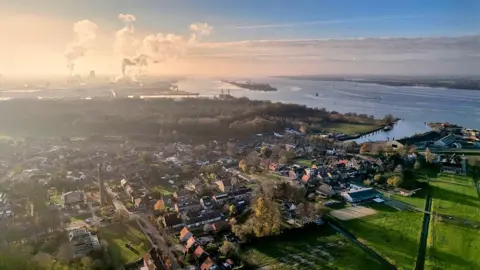
In the south of the Netherlands, beside a wide estuary, a village of around 1,100 people is likely to disappear from the map.
Moerdijk, a small fishing community 34km (21 miles) south of Rotterdam, is on the fault line of the nation's green energy transition.
The Dutch government says the country needs vast new sites to build high-voltage substations where cables carrying electricity from growing offshore wind farms can be connected to the national grid.
Yet the Netherlands is short of land. Officials argue that Moerdijk, which is on the southern shore of the Hollands Diep estuary, and well located next to ports, motorways, and existing overhead power lines, is a prime location for such a facility.
So the residents face the real threat of seeing their homes demolished at some point in the next decade, and the village potentially vanishing.
“We are being brought to the slaughter house,” says fishmonger Jaco Koman, whose family has trawled these waters since 1918. The threat of living in a village that could be cleared for new energy infrastructure is overwhelming for residents.
If the government decides in favor of the plan, it would mean not just the loss of homes but generations of community ties and histories.
While residents understand the need for clean energy, they question why the burden should fall on their village. Many believe that infrastructure should be built further out to sea, thus preserving their community.
The unease is palpable; for sale signs stand out on driveways as prospective buyers shy away from investing in a community at risk of uprooting. In the local grocery shop, owner Andrea reflects on the personal stakes: losing her family home, where her children were born, and uncertainties about the future of the village cemetery add to her distress.
As discussions continue, Moerdijk stands as a microcosm of the larger national tensions between local communities and central government priorities regarding energy transformation. What’s ultimately decided here may set a precedent for future developments across the Netherlands, as the nation seeks to transition to renewable sources while facing land scarcity.