In brief
In a recent news conference, Israeli Prime Minister Benjamin Netanyahu stated that Israel independently struck the South Pars gas field in Iran. This attack has led to retaliatory actions from Iran, including strikes on energy infrastructure in Qatar. The incident has raised significant concerns over the stability of global energy supplies, as well as the coherence of U.S.-Israel strategies regarding the ongoing conflict with Iran.
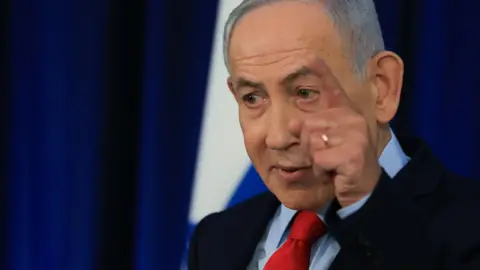
Israel's Prime Minister Benjamin Netanyahu has stated that Israel acted alone in attacking an Iranian gas field, as tensions mount over strikes on energy infrastructure across the region.
Israel hit Iran's South Pars - part of the world's largest natural gas field - and Tehran retaliated by striking an energy complex in Qatar and attacking other energy targets in the Gulf.
The attacks led to a spike in energy prices and U.S. President Donald Trump later indicated he had not been informed of them in advance. This fallout has raised questions regarding the level of alignment between Israel and the U.S. in their military objectives.
During the news conference on Thursday, Netanyahu mentioned that Trump had requested no further attacks on energy targets. Contradicting his earlier claims, three unnamed Israeli officials stated that the attack on South Pars was coordinated with the U.S. in advance, but they were not surprised by Trump's reaction.
Netanyahu denied dragging the U.S. into the conflict or misleading the President, affirming that no one could dictate actions to him.
This escalation in assaults on energy infrastructure signifies a notable intensification of the conflict initiated by the U.S. and Israel against Iran, with Iran already responding by limiting maritime activity through the Strait of Hormuz.
About one-fifth of the 100 million barrels of oil consumed daily traverses the strategically significant Strait of Hormuz, which lies adjacent to Iran's coast.
Following the Iranian strike on Qatar's Ras Laffan industrial area—home to the largest liquefied natural gas processing plant—QatarEnergy stated that around 17% of its export capacity would be impacted. Qatar’s Prime Minister, Mohammed bin Abdurrahman Al-Thani, has warned that the attack would have significant repercussions for global energy supplies, categorizing it as a very dangerous escalation.
Meanwhile, Iran’s Foreign Minister Abbas Araghchi stated that Iran would show zero restraint if its infrastructure were attacked again.
Gas prices, which had been rising since the conflict's onset, surged following the Iranian attack. The UK benchmark briefly peaked at nearly 183p per therm on Thursday before slightly lowering back to 154.8p, marking an 11.3% increase from the prior day. European energy prices also climbed by over 10%.