Warning: This story contains graphic descriptions of executions.
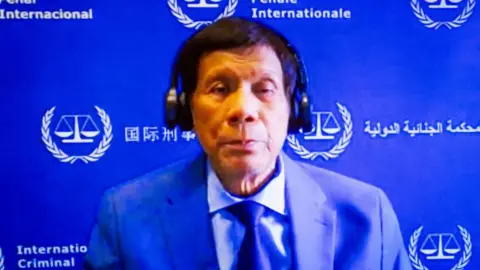
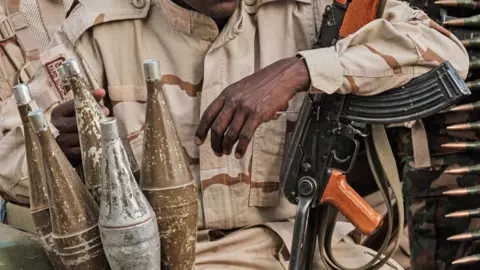
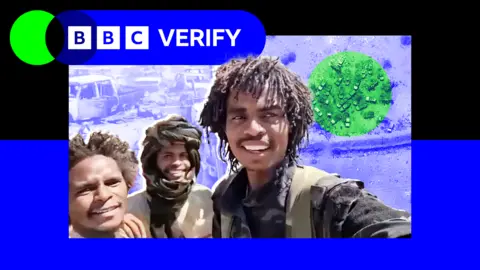
Fighters laugh as they ride on the back of a pick-up truck, speeding past a row of nine dead bodies and driving towards the setting Sudanese sun. Look at all this work. Look at this genocide, one cheers. He smiles as he turns the camera on himself and his fellow fighters, their Rapid Support Forces (RSF) badges on display: They will all die like this. The men are celebrating a massacre that humanitarian officials fear killed more than 2,000 people in the Sudanese city of el-Fasher last month. On Monday, the International Criminal Court (ICC) said it was investigating whether the paramilitary may have committed war crimes and crimes against humanity.
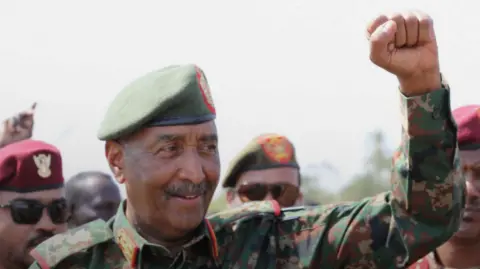
El-Fasher was a key target for the paramilitary RSF. It was the last stronghold in Darfur held by the Sudanese military - with whom the RSF has waged a devastating war since their ruling coalition collapsed in 2023. More than 150,000 people are estimated to have been killed by the fighting over the past two years and both sides stand accused of a litany of war crimes - many of which were repeated by the RSF after the fall of el-Fasher.
A city cut off from the world
Having held the city under siege for almost two years, from August the RSF moved to consolidate its position and blockade the remaining civilian population. Satellite images show that troops began to construct a massive berm - a raised sand barrier - around the perimeter of el-Fasher, sealing off access routes and blocking aid. By early October the ring completely surrounded the city - with a smaller barricade encircling a neighboring village.
As the siege intensified, 78 people were killed in an RSF attack on a mosque on 19 September, while the UN said 53 more were killed in drone and artillery strikes on a displacement camp in October.
Graphic footage shows unarmed people gunned down
Prior to the paramilitary's seizure of el-Fasher, very little information had emerged from the city for months. But within hours of the military's collapse, footage of the atrocities committed by the RSF started to appear online, shattering the silence that had fallen on the city. One of the most graphic videos to emerge and analyzed by BBC Verify showed the aftermath of a massacre at a university building on the western side of the city, where dozens of dead bodies were seen scattered across the floor.
An elderly man wearing a white tunic sat alone among the bodies. He turned to look as a fighter armed with a rifle walked down the stairs towards him. Raising his weapon, the gunman fired a single shot at the man, who collapsed to the floor motionless. Fellow soldiers, unfazed by the act, immediately spotted another man's leg twitch in the tangle of bodies. Why is this one still alive, one fighter cried. Shoot him. Satellite images taken on 26 October appeared to confirm that executions were also carried out on the streets of el-Fasher, according to a report published by the Yale Humanitarian Research Lab.
RSF commanders seek to carry out damage control
In the days following the massacre, RSF leader Gen Mohamed Hamdan Dagalo admitted that his troops had committed violations and said the incidents would be investigated. A senior UN official stated that the RSF had given notice that they had arrested some suspects within their ranks. Despite a social media campaign seeking to reframe the narrative, their actions have sparked global outrage, and BBC Verify has approached the RSF for a response.