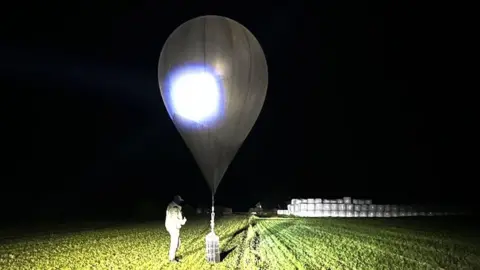
The Lithuanian government has declared a nationwide emergency situation in response to a series of incursions from neighbouring Belarus by weather balloons carrying smuggled cigarettes.
Prime Minister Inga Ruginiene condemned the balloon incursions as a hybrid attack by Belarus that posed a real risk to national security and civil aviation.
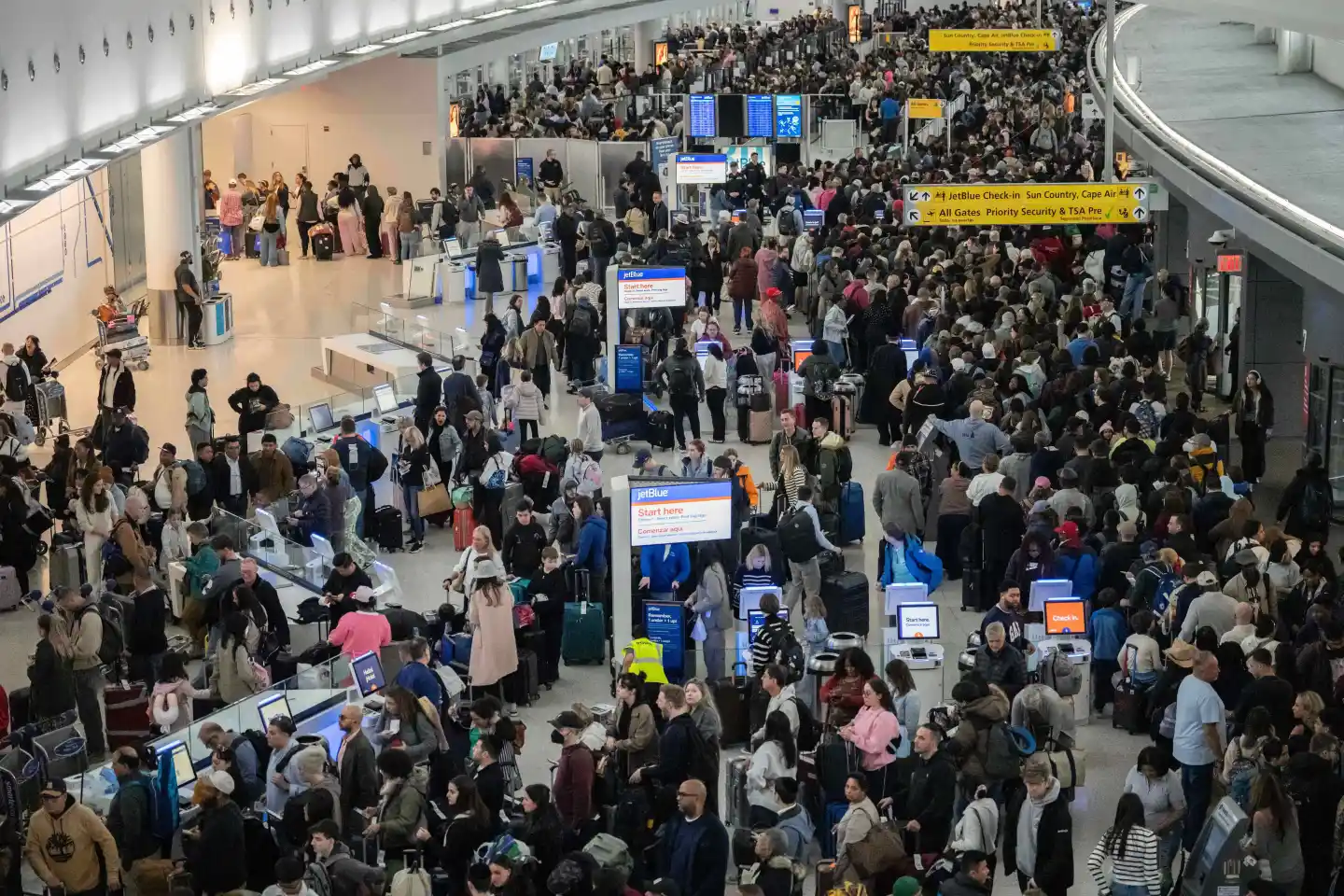
This year alone, officials say about 600 balloons linked to smuggling and almost 200 drones have entered Lithuanian airspace, leading to the repeated closure of Vilnius airport.
Belarusian leader Alexander Lukashenko denies being behind the incursions, alleging the issue has been politicised by Lithuania, which is a member of both the EU and Nato.
Lithuania's decision to impose an emergency situation is a step below a state of emergency, which was last imposed in 2022 after Russia's full-scale invasion of Ukraine. It grants the armed forces additional powers to respond faster and more effectively.
Belarus's long-time leader is a close ally of Russia's Vladimir Putin and Lithuania's President, Gitanas Nauseda, has said there is a lot of evidence that the balloon threat is a deliberate action aimed at destabilising the situation in Lithuania.
A number of European countries have faced threats from Russia, which the EU has condemned as a hybrid campaign that includes sabotage, disruption to critical infrastructure and most recently drone flights near sensitive sites.
Last month, the head of Nato's military committee, Adml Giuseppe Cavo Dragone, said the Western military alliance was considering a more aggressive or pro-active stance to Russia's hybrid warfare.
Lithuania has accused Belarus of similar provocations before, including an influx of irregular migrants crossing the boarder. In response to the latest threats, Lithuania has closed two border checkpoints with Belarus.
Officials report having intercepted numerous balloons and seized smuggled cigarettes, raising significant concerns over aviation safety and international law.
Despite Lukashenko's claims that the balloon incursions pose no problem, Lithuania insists that they have already disrupted airport operations significantly.