In brief
The military and political narrative in the occupied regions contrasts starkly with the reality of war-torn towns, underscoring the ongoing complexities of the conflict.
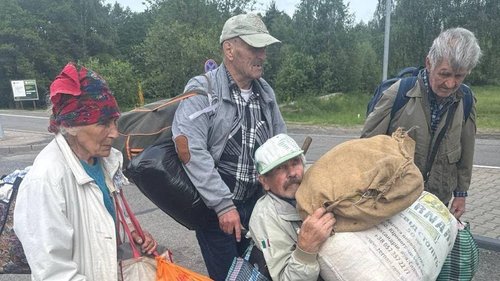
In Bakhmut, a town in Eastern Ukraine long held by Russian forces, the 80th anniversary of Victory Day, which celebrates the defeat of Nazi Germany in World War II, was marked by limited festivities. Russian military personnel stationed in the area shared videos on social media depicting themselves arranging colorful banners proclaiming “Happy Victory Day” and displaying the “Immortal Regiment” posters featuring veteran photos. However, the essence of joy was overshadowed by the desolation of a once-thriving town now resembling a ghostly shell of its former self, with a significant population displacement due to continuous bombing.Despite the military's enthusiasm, as expressed by a senior officer from the Russian army who claimed that Bakhmut had been “liberated,” the reality on the ground presents a contrasting picture. The towns in occupied territories, including Bakhmut, witnessed a subdued acknowledgment of the holiday, characterized mainly by scattered parades, small concerts, and the hanging of flags against a backdrop of destruction.In Russia, Victory Day is a monumental occasion layered with nationalistic sentiments and historical significance, amplified this year by President Putin’s efforts to position Russia as the continued leader of a militaristic legacy. On the contrary, in the occupied regions of Ukraine, while celebrations have been planned, they are notably modest and lack the grandeur seen in Russia, with local officials like Denis Pushilin announcing numerous events intended to fill the calendar with remembrances, attempting to associate Russian rule with Soviet nostalgia. This juxtaposition of celebration and devastation highlights the complex social fabric of areas enduring the consequences of ongoing conflict, as the inhabitants continue to grapple with loss amid attempts to resist and assert cultural identity. As the narrative unfolds, it is evident that the shadow of war looms large, overshadowing even the most significant commemorative events.