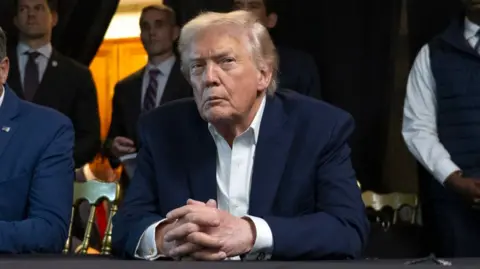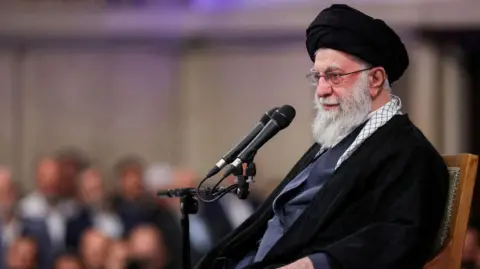
Iran's Supreme Leader Ayatollah Ali Khamenei has called anti-government protesters 'troublemakers' and 'a bunch of vandals' just trying 'to please the president of the US'. He accused crowds of destroying buildings because Donald Trump said he 'supports you'. Trump has warned Iran that if it kills protesters, the US would 'hit' the country 'very hard'.
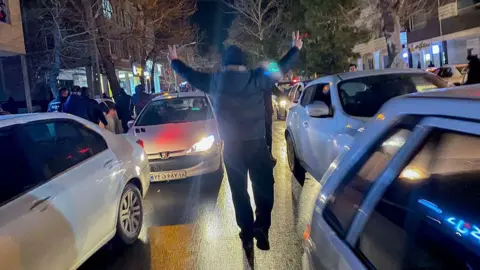
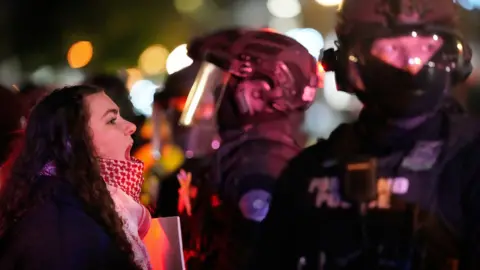
The protests, in their 13th day, erupted over the economy and have grown into the largest in years - leading to calls for an end to the Islamic Republic and some urging the restoration of the monarchy. At least 48 protesters and 14 security personnel have been killed, according to human rights groups. An internet blackout is in place.
Khamenei remained defiant in a televised address on Friday. 'Let everyone know that the Islamic Republic came to power through the blood of several hundred thousand honourable people and it will not back down in the face of those who deny this,' the 86-year-old said.
Since protests began on 28 December, in addition to the 48 protesters killed, more than 2,277 individuals have also been arrested, the US-based Human Rights Activist News Agency (HRANA) said. The Norway-based Iran Human Rights (IHRNGO) said at least 51 protesters, including nine children, had been killed.
BBC Persian has spoken to the families of 22 of them and confirmed their identities. The BBC and most other international news organisations are barred from reporting inside Iran.
The Islamic Revolutionary Guard Corps issued a statement on Friday saying it would not tolerate the continuation of the current situation in the country.
Reza Pahlavi, the son of Iran's last shah who was overthrown by the 1979 Islamic revolution, called on Trump on Friday to 'be prepared to intervene to help the people of Iran'. Pahlavi, who lives close to Washington DC, had urged protesters to take to the streets on Thursday and Friday.
Protests have taken place across the country, with BBC Verify verifying videos from 67 locations. On Friday, protesters amassed after weekly prayers in the south-eastern city of Zahedan. In some videos, people can be heard chanting 'death to the dictator', referencing Khamenei.
Since Thursday evening, the country has been under a near-total internet blackout, impeding communication and data accessibility. Major risks associated with government violence against protesters continue to rise, leading to dire warnings from human rights activists concerning the potential for large-scale violence during the ongoing blackout.
The protests, in their 13th day, erupted over the economy and have grown into the largest in years - leading to calls for an end to the Islamic Republic and some urging the restoration of the monarchy. At least 48 protesters and 14 security personnel have been killed, according to human rights groups. An internet blackout is in place.
Khamenei remained defiant in a televised address on Friday. 'Let everyone know that the Islamic Republic came to power through the blood of several hundred thousand honourable people and it will not back down in the face of those who deny this,' the 86-year-old said.
Since protests began on 28 December, in addition to the 48 protesters killed, more than 2,277 individuals have also been arrested, the US-based Human Rights Activist News Agency (HRANA) said. The Norway-based Iran Human Rights (IHRNGO) said at least 51 protesters, including nine children, had been killed.
BBC Persian has spoken to the families of 22 of them and confirmed their identities. The BBC and most other international news organisations are barred from reporting inside Iran.
The Islamic Revolutionary Guard Corps issued a statement on Friday saying it would not tolerate the continuation of the current situation in the country.
Reza Pahlavi, the son of Iran's last shah who was overthrown by the 1979 Islamic revolution, called on Trump on Friday to 'be prepared to intervene to help the people of Iran'. Pahlavi, who lives close to Washington DC, had urged protesters to take to the streets on Thursday and Friday.
Protests have taken place across the country, with BBC Verify verifying videos from 67 locations. On Friday, protesters amassed after weekly prayers in the south-eastern city of Zahedan. In some videos, people can be heard chanting 'death to the dictator', referencing Khamenei.
Since Thursday evening, the country has been under a near-total internet blackout, impeding communication and data accessibility. Major risks associated with government violence against protesters continue to rise, leading to dire warnings from human rights activists concerning the potential for large-scale violence during the ongoing blackout.