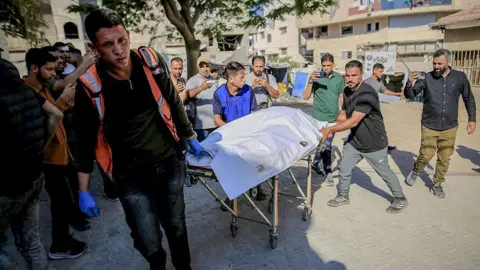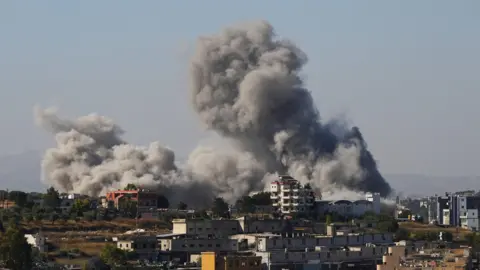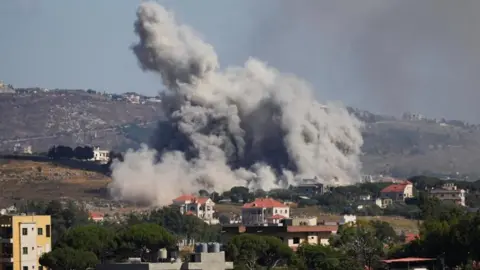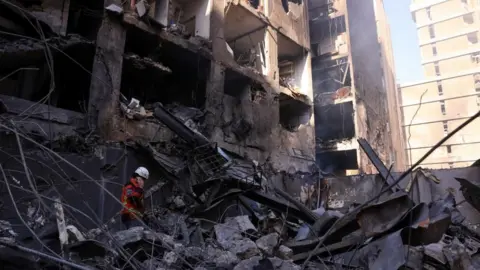
An Iranian minister has told the BBC that Israeli strikes in Lebanon on Wednesday constituted a 'grave violation' of the US-Iran ceasefire agreement. Deputy Foreign Minister Saeed Khatibzadeh stated that Lebanon was covered by the two-week deal agreed upon Tuesday, a claim disputed by the US and Israel. He stressed that the US must choose 'between war and ceasefire.' The Lebanese health ministry reported at least 203 fatalities in the airstrikes, which targeted what Israel identified as Hezbollah command centers and military installations.
Khatibzadeh, pressed on whether Tehran would urge Hezbollah to halt rocket attacks on Israel, asserted that the Iranian-backed group had 'abided' by the ceasefire. In a somewhat reciprocal response, Hezbollah confirmed it fired at Israel overnight, citing ceasefire violations, and has vowed to continue its offensive until 'Israeli-American aggression' against Lebanon ceases.
During an interview with BBC Radio 4's Today program, Khatibzadeh emphasized Iran's communication with the White House, summarizing their message as a reminder that coexistence between ceasefire demands and military aggression is untenable. He labeled Hezbollah as a 'Lebanese freedom movement' and reinforced that they had complied with the ceasefire agreement, while expressing doubt about achieving a lasting understanding with the US.
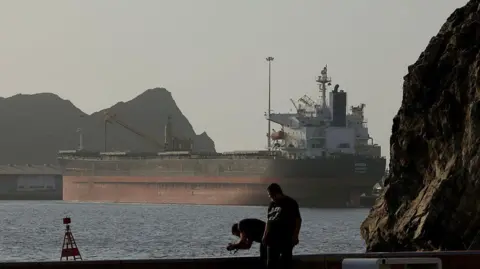
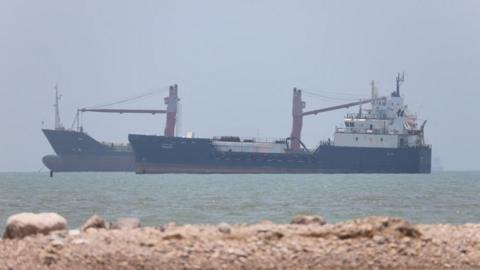
Additionally, the Iranian minister stated that Tehran expected to resume safe passage protocols in the Strait of Hormuz and attributed any issues to US military provocations. If US aggression ceased, he insisted Iran would ensure safe maritime travel through this crucial waterway, which plays a pivotal role in the global energy supply chain.
The ongoing conflict has raised significant concern about destabilizing the Middle East further and impacting global markets, as the ceasefire appears fragile amid a backdrop of violence and military posturing.
Khatibzadeh, pressed on whether Tehran would urge Hezbollah to halt rocket attacks on Israel, asserted that the Iranian-backed group had 'abided' by the ceasefire. In a somewhat reciprocal response, Hezbollah confirmed it fired at Israel overnight, citing ceasefire violations, and has vowed to continue its offensive until 'Israeli-American aggression' against Lebanon ceases.
During an interview with BBC Radio 4's Today program, Khatibzadeh emphasized Iran's communication with the White House, summarizing their message as a reminder that coexistence between ceasefire demands and military aggression is untenable. He labeled Hezbollah as a 'Lebanese freedom movement' and reinforced that they had complied with the ceasefire agreement, while expressing doubt about achieving a lasting understanding with the US.
Additionally, the Iranian minister stated that Tehran expected to resume safe passage protocols in the Strait of Hormuz and attributed any issues to US military provocations. If US aggression ceased, he insisted Iran would ensure safe maritime travel through this crucial waterway, which plays a pivotal role in the global energy supply chain.
The ongoing conflict has raised significant concern about destabilizing the Middle East further and impacting global markets, as the ceasefire appears fragile amid a backdrop of violence and military posturing.