On Wednesday, India launched its 16th national census, marking the first comprehensive population count in more than 15 years. More than a billion residents will be asked 33 key questions ranging from housing conditions to access to technology, while an ambitious army of over three million officials is deployed across the country to gather this vital data.
This exercise is noteworthy not only for its scale—encompassing more than 36 states and territories—but also for the significant use of digital technology for the first time. Enumerators will utilize mobile applications to record responses, and residents can participate via a self-enumeration portal available in 16 languages.
The first phase, scheduled until mid-May, will focus on gathering information about housing conditions and amenities, with the second phase set for February 2027 to detail census data on demographics, fertility, education, and migration, including caste enumeration — a sensitive topic in Indian society.
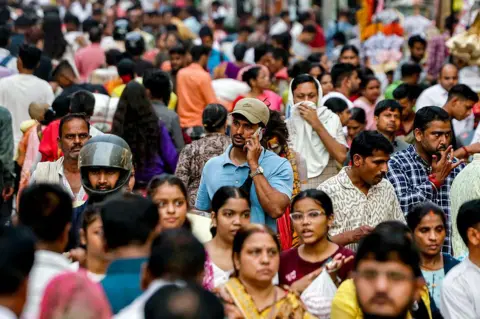
With a population exceeding 1.4 billion, India has recently overtaken China as the world's most populous country. Despite declining fertility rates, the country maintains a youthful demographic, with a median age of 28. This census aims to address evolving societal structures and ensure governmental policies are grounded in current realities. Given the challenges posed by previous census delays, accurate and updated demographic insights are essential for planning welfare programs and resource allocation moving forward.
From its origins as a basic headcount in colonial times, the scope of India's census has reflected societal shifts over decades. Today, the questionnaire captures comprehensive data on employment, education, and housing, signifying a critical tool in understanding and addressing the complexities of modern Indian society.
This exercise is noteworthy not only for its scale—encompassing more than 36 states and territories—but also for the significant use of digital technology for the first time. Enumerators will utilize mobile applications to record responses, and residents can participate via a self-enumeration portal available in 16 languages.
The first phase, scheduled until mid-May, will focus on gathering information about housing conditions and amenities, with the second phase set for February 2027 to detail census data on demographics, fertility, education, and migration, including caste enumeration — a sensitive topic in Indian society.
With a population exceeding 1.4 billion, India has recently overtaken China as the world's most populous country. Despite declining fertility rates, the country maintains a youthful demographic, with a median age of 28. This census aims to address evolving societal structures and ensure governmental policies are grounded in current realities. Given the challenges posed by previous census delays, accurate and updated demographic insights are essential for planning welfare programs and resource allocation moving forward.
From its origins as a basic headcount in colonial times, the scope of India's census has reflected societal shifts over decades. Today, the questionnaire captures comprehensive data on employment, education, and housing, signifying a critical tool in understanding and addressing the complexities of modern Indian society.