In brief
India has initiated its 16th census, the first in over 15 years, involving an ambitious count of its more than 1.4 billion people. With 33 crucial questions, authorities aim to gather data vital for policy-making and welfare delivery. The census will be conducted digitally, marking a significant evolution in data collection methods. This exercise not only addresses demographic shifts after surpassing China in population but also addresses pressing concerns surrounding social representation, economic conditions, and changing household definitions.
Does your house have a concrete roof or a thatched one? What is your main cereal? Do you have internet access, or just a basic mobile phone? And how many married couples live under your roof?
These are among the 33 questions that over a billion Indians will answer as the country begins the world's largest census on Wednesday, the first significant population count in more than 15 years.
The ambitious two-phase exercise will enlist over three million officials to spend a year counting every person in India. This 16th census, which will also include caste data, is considered crucial for policy formulation, welfare delivery, and political representation in the world's most populous nation.
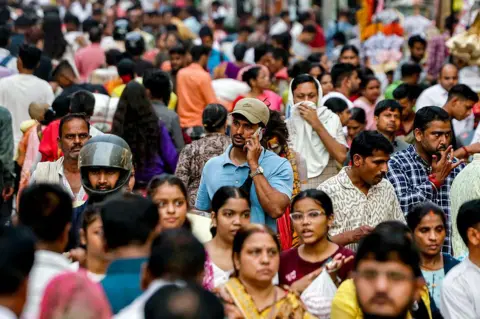
In 2023, India surpassed China, with a population over 1.4 billion, according to the United Nations Population Fund. Despite a declining birth rate and a median age of 28, India remains one of the youngest countries globally, with nearly 70% of its population of working age.
The last census was conducted in 2011, while the 2021 census was delayed due to the pandemic and other scheduling issues—marking the first time this decennial exercise failed to adhere to its timetable.
The growth exercise will span across 36 states and federally administered territories, including more than 7,000 sub-districts, over 9,700 towns, and nearly 640,000 villages, with groundwork conducted by schoolteachers, government staff, and local officials.
Innovatively, this census will be conducted digitally. Enumerators will collect and upload data through mobile applications, and for the first time, residents can use a 16-language portal for self-enumeration, resulting in a unique ID for census verification.
The initial rollout begins in selected regions such as Andaman and Nicobar Islands, Delhi, Goa, Karnataka, Mizoram, and Odisha, where self-enumeration will take place from April 1 to 15, followed by a house listing and housing survey running from April 16 to May 15.
From its inception as a headcount under colonial rule, the Indian census questionnaire has expanded significantly, reflecting shifts in state priorities and social dynamics. Initially comprised of 17 questions in 1872, the census now addresses diverse facets, such as housing conditions and economic behavior, ensuring a comprehensive picture emerges about the Indian populace.
Authorities are aware of the ramifications of collecting extensive data. However, the absence of comprehensive population statistics since 2011 has led to a reliance on sample surveys for policymaking, resulting in challenges in addressing the complexities of India's evolving socio-economic landscape.
This census is regarded as critical: it is the definitive snapshot of India, capturing essential data regarding caste, religion, employment, education, and basic amenities, ultimately intending to present the clearest understanding of how the population lives amidst rapid changes.