In brief
India is gearing up to debate a significant constitutional amendment meant to reserve one-third of its parliamentary and state assembly seats for women, raising their representation closer to global averages. While the bill, linked to a population-based redraw of constituencies, seeks to enhance women's empowerment, it faces scrutiny from opposition parties who argue that the timing and method of implementation undermine its integrity. This proposed reform comes after years of women's limited representation in the political landscape, currently standing at only 14%.
India is preparing for a once-in-a-generation redraw of its political map, driven by what the government says is a push to reserve one-third of seats for women in parliament and state assemblies.
To do that, the government will unveil a constitutional amendment - requiring a two-thirds majority - backed by a three-day special session from Thursday.
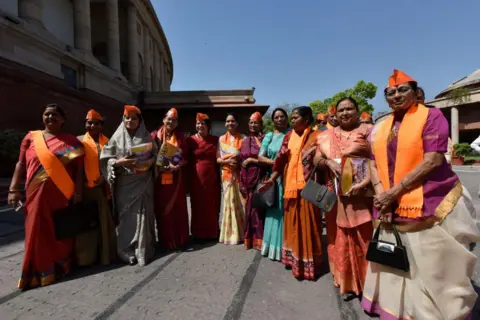
Currently, women make up about 14% of India's 543 lower house MPs. The reform would raise that figure to roughly a third, bringing it closer to global norms.
The rollout is now tied to a population-based redraw of constituencies based on the 2011 census, likely expanding the lower house from 543 to about 850 seats. However, this aspect has ignited controversy, as opposition parties accuse the government of rushing changes during an election season.
India already reserves 33% of seats for women in village councils and municipal corporations. Prime Minister Narendra Modi has characterized the Nari Shakti Vandan Adhiniyam, translating to 'Saluting Women Power Act', as a historic leap towards women's empowerment.
Opposition parties express concern that a simple women's quota is being interlinked with a contentious redraw of constituencies, perceived as a political maneuver rather than a straightforward reform. They advocate for reserving seats for women based solely on the current parliamentary strength without altering seat allocations during an election period.
The Modi-led government proposes this delimitation as a means to break away from past hesitance regarding seat redistribution, whereas many regional leaders fear the implications for their electoral strength, especially in southern states with lower population growth.
While this bill aims for a significant reform, the path ahead is strewn with political tension, potential challenges, and calls for clarity regarding the implementation and future of women's representation in India.