IceCube’s Neutrinos: A Nobel‑Winning Vision of the Cosmos
Belgian physicist Francis Halzen has been awarded the Nobel Prize in Physics for spearheading the IceCube Neutrino Observatory, a groundbreaking experiment that turns the polar ice sheet into a cosmic detector.
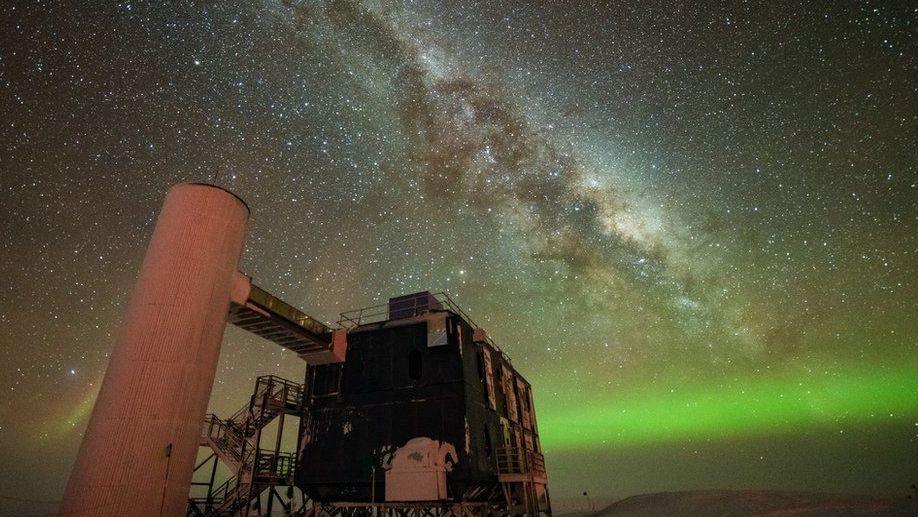
IceCube uses a cubic kilometre of Antarctica’s clear ice embedded with thousands of light sensors to catch rare high‑energy neutrinos that stream from violent events such as supernovae and black holes. These ghost‑like particles can travel undisturbed through matter, allowing scientists to trace their origins to the farthest reaches of the universe.
The observatory was conceived in 1988 and brought to fruition through an international collaboration of physicists, engineers and glaciologists. Its success has opened a new era of “neutrino astronomy” – observing the cosmos via particles that ordinary telescopes cannot detect.
“Their fleeting interactions illuminate the most extreme engines of the cosmos,” explains Halzen. “Our ability to pinpoint their direction and energy lets us peer into environments that light cannot reveal.”
The Nobel Committee praised Halzen for “decisive contribution” to the field, noting that his vision has paved the way for a novel class of astronomical observations that rely on nature’s own framework rather than engineered telescopes.
Beyond advancing particle physics, the IceCube project demonstrates how deep‑earth research can probe environmental conditions of the Antarctic, providing data on ice dynamics and climate change. It underscores the link between fundamental science and our understanding of Earth’s remote systems.