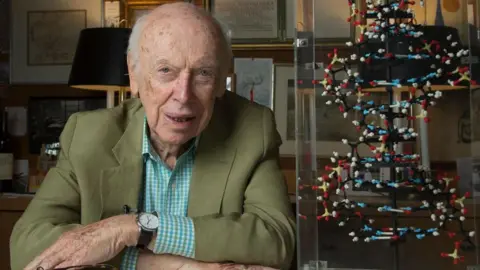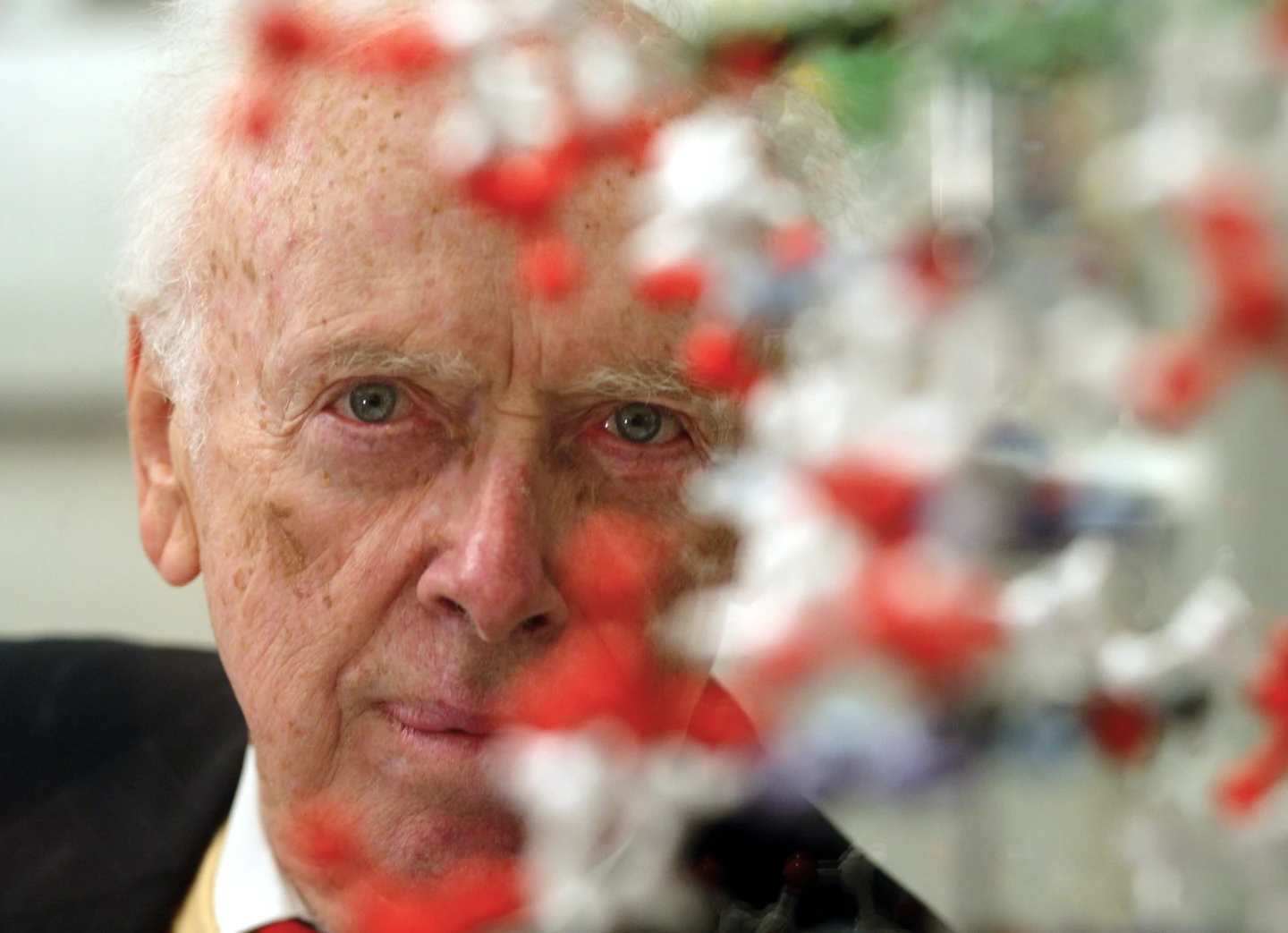
James D. Watson, whose co-discovery of the twisted-ladder structure of DNA in 1953 helped light the long fuse of a revolution in medicine, crime-fighting, genealogy, and ethics, has died at the age of 97.
The breakthrough discovery, made when the once-brash Watson was merely 24 years old, established his status as a cherished figure in the scientific community for decades. Nevertheless, as he approached the end of his life, he faced significant backlash and professional reproach for several offensive remarks, including implications regarding the intelligence of different races.
Watson was awarded the Nobel Prize in Physiology or Medicine in 1962, alongside Francis Crick and Maurice Wilkins, for pinpointing that DNA is a double helix composed of two spiraling strands, resembling a lengthy, delicately twisting ladder.
This realization was fundamentally transformative. It immediately indicated the method through which hereditary information is preserved and how cells replicate their DNA during division.
The double helix has since become an emblematic representation of scientific progress, featuring prominently not only in scientific literature but also in art and popular culture.
The implications of Watson's discovery propelled advancements in genetic manipulation, disease treatment, and forensic science, yet raised considerable ethical dilemmas around genetic modification and its impact on future generations.
“Francis Crick and I made the discovery of the century, that was pretty clear,” Watson reflected in a past interview. However, he acknowledged he never made a finding of equal magnitude thereafter. He did contribute significantly through educational materials and by playing a fundamental role in mapping the human genome.
Watson passed away following a brief illness, with his family confirming his death. While he once fought for better understanding of genetic-related diseases, many controversies, particularly those relating to race, overshadowed his scientific achievements.
In 2007, he endured public outrage after proclaiming his pessimism regarding the intelligence disparity among races, a viewpoint that later cost him positions of prestige within the scientific community.
Throughout his career, Watson faced scrutiny for various inflammatory comments, often veering away from scientific consensus, especially as he aged. His legacy remains mixed — a brilliant scientist whose discoveries changed the world, yet one whose later views often sparked controversy.
James Dewey Watson was born on April 6, 1928, in Chicago. Despite the controversies surrounding him, his work in genetics will carry an influence felt for generations to come.