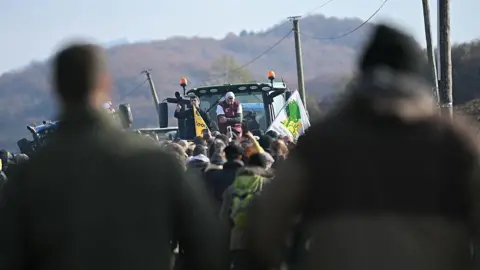
Angry French farmers are calling for more protests over the government-backed slaughter of cattle herds affected by the contagious disease known as Lumpy Skin Disease (LSD).
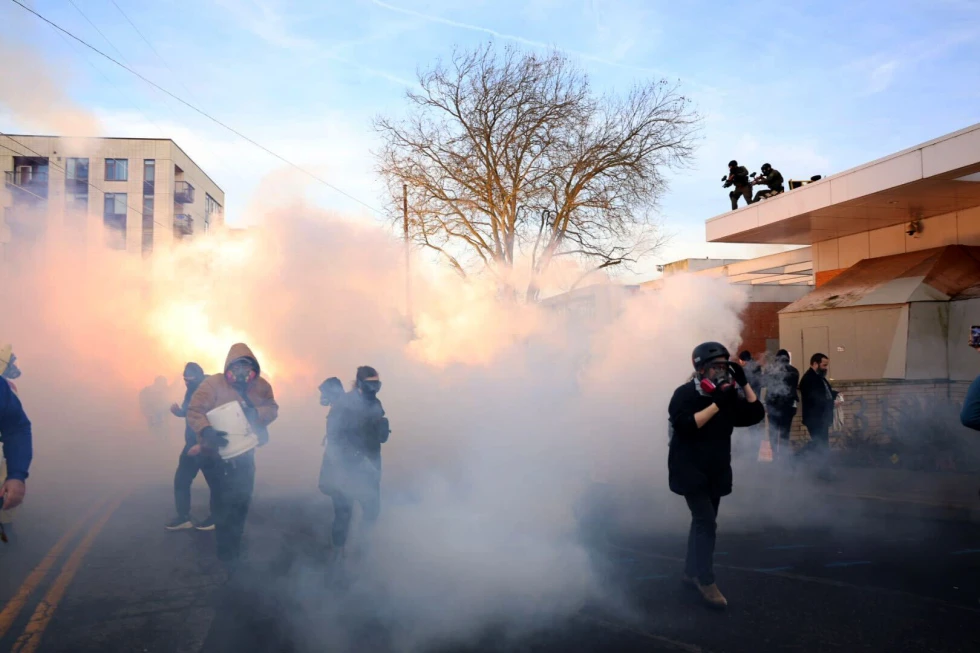
On Thursday, clashes erupted between riot police and demonstrators in the southern Ariège department after veterinarians were summoned to cull possibly contaminated cattle at a local farm.
Farmers have also dumped manure outside government offices and obstructed roads in protest. In some cases, activists targeted the offices of environmental groups in the Charente-Maritime department, expressing their discontent.
LSD is primarily transmitted by fly bites and manifests through fever, mucal discharge, and nodules on the skin. Although generally non-fatal, it can severely affect milk production, leaving infected cattle unsalable.
The disease has spread across Europe since arriving from Africa a decade ago, with France experiencing its first outbreak in June. This outbreak even forced a modification of the Tour de France cycling race route.
The French government's policy involves the culling of entire herds where one infection is detected, a decision that has stirred opposition from major farming unions. Organizations like Conféderation Rurale and Conféderation Paysanne argue that selective culling and vaccination would be sufficient, while veterinarians maintain this approach is necessary due to the inability to distinguish healthy animals from symptomless carriers of the virus.
Sine June, around 110 LSD outbreaks have been recorded across France, resulting in the slaughter of approximately 3,000 animals. The authorities have linked the rise in cases to the illegal movement of cattle from affected zones.
The unrest among farmers signifies a deeper concern over ongoing EU regulations and competition from abroad. A significant protest is scheduled in Brussels coinciding with a meeting of EU leaders, as multiple sectors within French agriculture struggle with crises ranging from declining wine sales to avian flu in poultry farming.
Moreover, growing apprehension looms over an impending EU free-trade agreement with South American countries, which farmers fear may bring more budget-friendly imports produced under weaker environmental regulations.