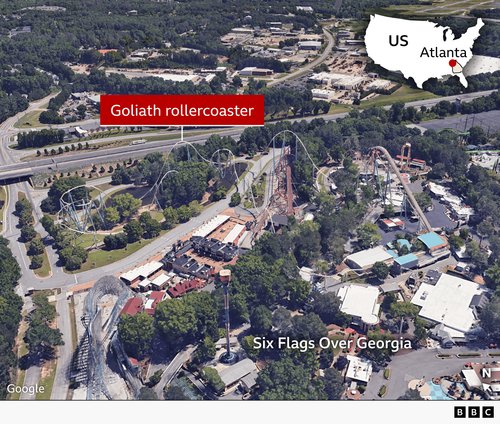
In brief
One rider died and several were injured when a rollercoaster at Six Flags Over Georgia stopped halfway, raising questions about safety standards and the future of amusement parks. The incident, involving the Goliath coaster, was captured on aerial footage and prompted an emergency response from park staff and local authorities. While the park expressed condolences, regulators are reviewing the ride’s design and operational procedures. The tragedy occurs amid a broader industry shift toward safer, more sustainable ride technologies, following earlier closures of high‑impact coasters such as X2. Enhancing safety with advanced sensors, regenerative braking and eco‑friendly materials could prevent future accidents while reducing environmental footprints.
A tragic incident at Six Flags Over Georgia has claimed one life and left several injured after a roller coaster halted midway, prompting a rapid response from park staff and local emergency services.
The Goliath coaster, a 200‑foot steel marvel that reaches 70 mph, was briefly stopped as riders were assisted off the track. While the park publicly offered condolences, investigators are probing the exact cause of the stoppage, with witnesses suggesting a rider may have been ejected from the ride.
This event comes against a backdrop of increasing scrutiny over high‑speed amusement attractions. Six Flags recently ceased operations of its X2 coaster after many riders reported head injuries, citing safety and well‑being as the primary justification.
Industry analysts argue that rides engineered with integrated sensor networks, real‑time predictive maintenance and regenerative braking systems can reduce both accident risk and energy consumption. By adopting such technology, parks would not only enhance guest safety but also align with broader sustainability goals.
Municipal leaders in Mableton and Cobb County are coordinating with the park to review safety protocols, and national regulators are likely to update ride‑design standards in the wake of this tragedy.