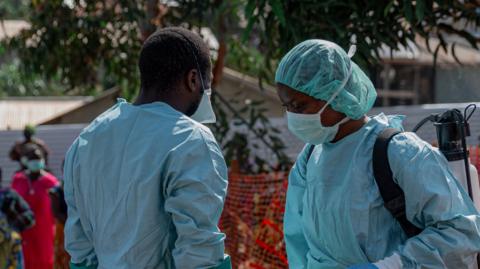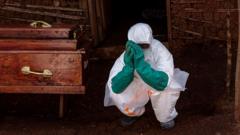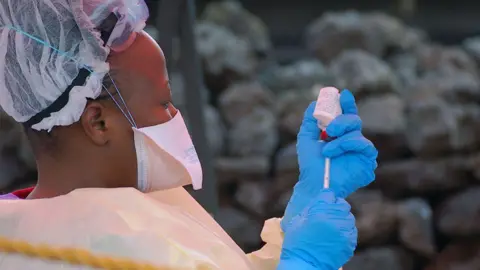
Africa's top health agency has declared an Ebola outbreak in the Democratic Republic of Congo's eastern Ituri province. Around 246 cases and 80 deaths have been reported, mainly in the gold-mining towns of Mongwalu and Rwampara, according to the Africa Centres for Disease Control and Prevention (Africa CDC).
Ugandan officials confirmed one case of imported Ebola from DR Congo on Friday, stating that a 59-year-old male who died on Thursday had tested positive.
Ebola, first discovered in 1976 in what is now DR Congo, is thought to have spread from bats and is spread through direct contact with bodily fluids and through broken skin. The symptoms include severe bleeding and organ failure, with early symptoms like fever, muscle pain, fatigue, and headache. The average fatality rate is around 50%, and there is no proven cure for the disease.
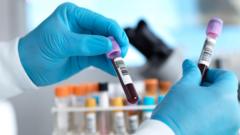
Preliminary tests conducted at the Institut National de Recherche Biomédicale in Kinshasa detected the virus in 13 of 20 samples analyzed, as consultations with DR Congo's Ministry of Health and National Public Institute continue. The situation is concerning, with additional suspected cases reported in Ituri's provincial capital, Bunia, and regional co-ordination deemed essential due to population movements between the affected areas and neighboring countries.
The Congolese government is yet to officially declare an outbreak, but discussions with Uganda and South Sudan regarding health interventions are ongoing. The Ituri province has been under military rule since 2021 to mitigate ongoing violence from armed groups, including the ADF, affiliated with the Islamic State group.
Ugandan officials confirmed one case of imported Ebola from DR Congo on Friday, stating that a 59-year-old male who died on Thursday had tested positive.
Ebola, first discovered in 1976 in what is now DR Congo, is thought to have spread from bats and is spread through direct contact with bodily fluids and through broken skin. The symptoms include severe bleeding and organ failure, with early symptoms like fever, muscle pain, fatigue, and headache. The average fatality rate is around 50%, and there is no proven cure for the disease.
Preliminary tests conducted at the Institut National de Recherche Biomédicale in Kinshasa detected the virus in 13 of 20 samples analyzed, as consultations with DR Congo's Ministry of Health and National Public Institute continue. The situation is concerning, with additional suspected cases reported in Ituri's provincial capital, Bunia, and regional co-ordination deemed essential due to population movements between the affected areas and neighboring countries.
The Congolese government is yet to officially declare an outbreak, but discussions with Uganda and South Sudan regarding health interventions are ongoing. The Ituri province has been under military rule since 2021 to mitigate ongoing violence from armed groups, including the ADF, affiliated with the Islamic State group.