In brief
In late July, strong winds of up to 125 km/h fanned wildfires across Crete’s Rethymno region, forcing the evacuation of around 8,000 residents and tourists. Two firefighters died while battling the blazes, and a third did so on the mainland. While the island’s fire is still uncontrolled, neighboring countries such as Spain, Portugal, and France are experiencing widespread fires with significant evacuations and destruction of homes. Climate‑driven heatwaves and dry vegetation are fueling fire‑prone conditions across Europe, prompting urgent calls for better fire‑management and preventive measures.
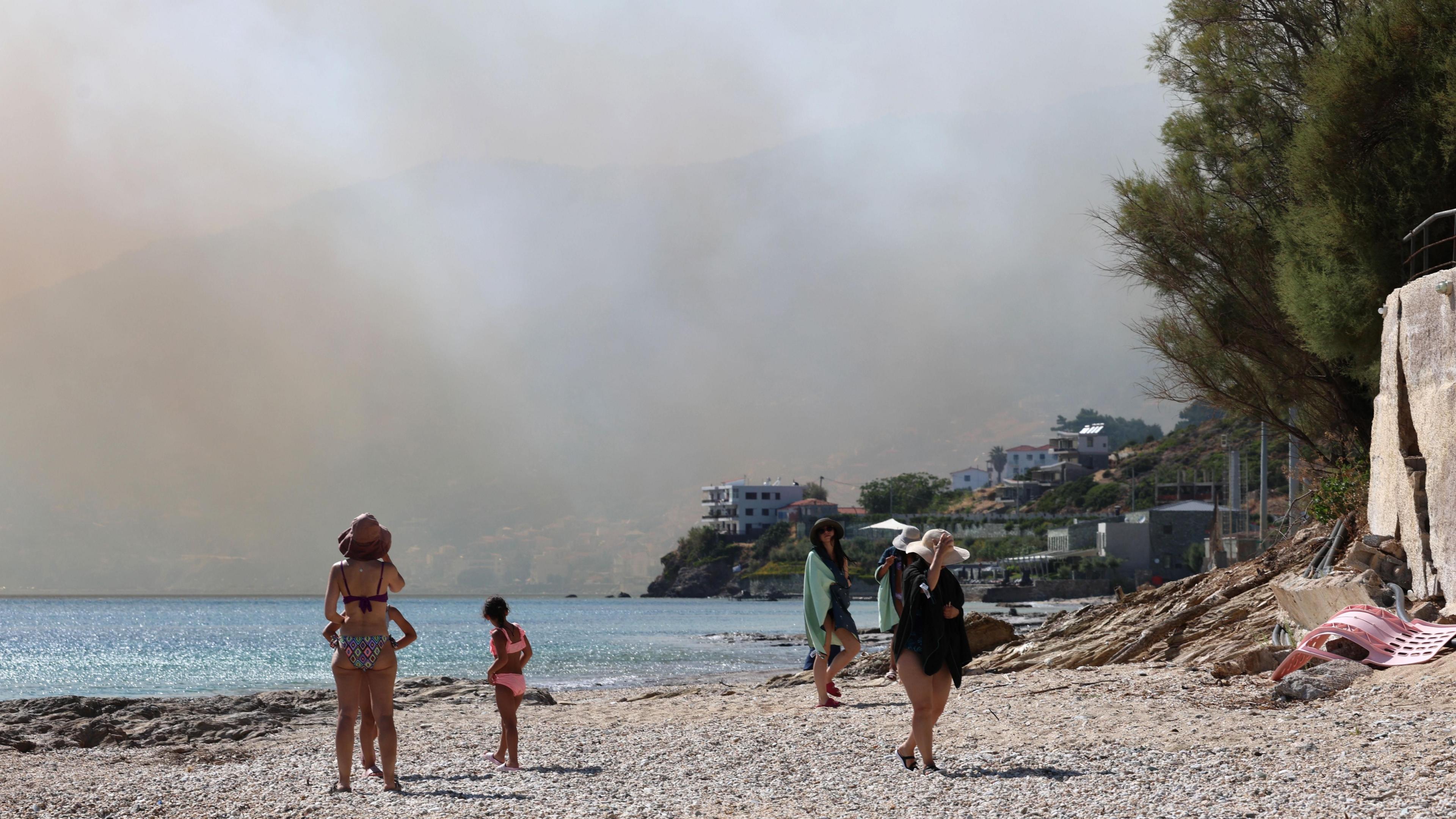
Thousands of residents and tourists were evacuated from villages in Crete as fiercely fueled wildfires threatened the island’s tourist resorts.
On Wednesday, two firefighters were killed near Krya Vrysi in the Rethymno region when they were trapped by an advancing blaze, while another firefighter died in Greece’s mainland town of Gytheio.
Gale‑force winds, reaching 125 km/h, pushed the fire across mixed forests and agricultural land, compelling the Hellenic Fire Service to evacuate roughly 8,000 people overnight. The decision to let evacuees return later that day was made once conditions improved.
Crete is not alone. In Spain and Portugal, fires have devastated thousands of hectares. Spain’s Ávila region saw over 43,000 hectares burned and a recent decision to lift the national emergency, though the Madrid and León provinces still face active blazes. France’s Gironde wildfire has scorched the equivalent area of Detroit and destroyed 240 homes.
Experts warn that the Mediterranean’s dry vegetation—exacerbated by a mild, wet winter followed by successive heatwaves—has created tinder‑dry fuel that intensifies fire spread. Poor forest management compounds the risk, as unchanged vegetation creates continuous fuel ladders.
The current European fire season is projected to extend into late summer, with models indicating that the United Kingdom, Greece and Turkey could face worst‑case fire scenarios. Multiple countries have called for greater preventive measures and better community resilience.
If you are in an affected region and it is safe, please get in touch: Contact form