In brief
In the early hours of Monday, a 7.4‑magnitude quake rocks Colombia’s western region, killing at least 132 people and demolishing dozens of buildings. The epicentre near San José del Palmar in Chocó sent tremors that reached the capital, Bogotá, where residents were evacuated for safety. The government has declared a national disaster, activating emergency powers and reallocating budgets for rescue operations. International leaders like US Secretary of State Marco Rubio and EU Copernicus satellite operators have pledged aid, while the new president faces the task of managing what could be a legacy‑defining crisis.
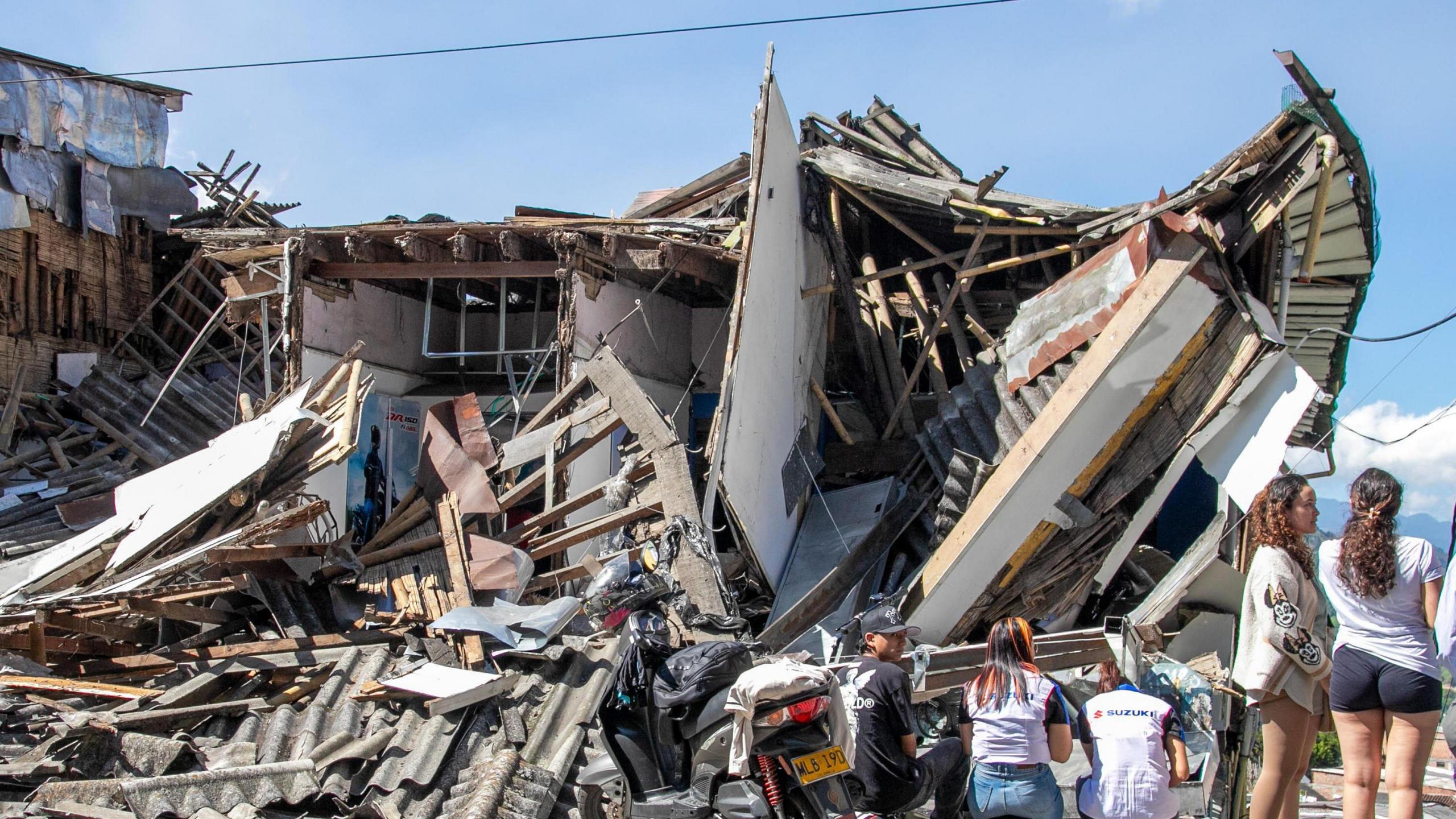
In the early morning hours of 10 August, a powerful 7.4‑magnitude earthquake struck Colombia’s western highlands, killing at least 132 people and shattering the city of Pereira’s historic Plaza Bolivar. The tremor struck at 07:34 local time, 103 km below the surface, unleashing shaking that was felt as far as Ecuador and Panama.
Pereira, known for its coffee plantations, suffered the hardest damage: 65 buildings collapsed, 15 of them still bearing survivors trapped inside. An estimated forty residents were confirmed dead in the metropolitan area, while two buildings in Manizales collapsed but spared lives thanks to strict seismic‑resistant construction codes.
Cali, the country’s third‑largest city, endured dozens of building collapses, with rescue teams combing through rubble for those caught beneath. In Bogotá, streets shuddered and traffic lights flickered, yet no major structural damage was reported; a precautionary curfew remains in place in parts of the city.
Colombia’s President Abelardo de la Espriella has declared a national disaster situation, granting special powers to redistribute budgets for infrastructure repair and humanitarian aid. The new president, who assumed office a week ago, faces the challenge of coordinating a relief effort that includes the reallocation of public and private resources.
International support arrived quickly: the United States, under Secretary of State Marco Rubio, pledged monitoring and assistance; the European Union activated Copernicus satellite imagery for rescue mapping; and nearby El Salvador offered personnel and equipment for search and rescue missions.
Experts warn that deep earthquakes, such as the one that struck Colombia, allow energy to surge in a way that can damage buildings and unleash stronger aftershocks, but generally pose less risk than surface‑fault events. Yet the magnitude and depth of this quake underscore the need for continuous seismic monitoring, robust building codes, and community preparedness—key pillars in fostering a climate‑resilient future.
Noted citizen scientists and local volunteers have mobilised across the country, coordinating with disaster response teams to clear debris, provide medical aid, and support displaced families. The crisis has highlighted the urgent need for climate‑adaptive urban planning, reinforcing infrastructure to withstand extreme events, and ensuring prompt, coordinated emergency responses for communities vulnerable to future seismic activity.