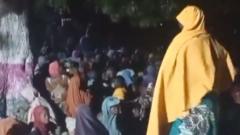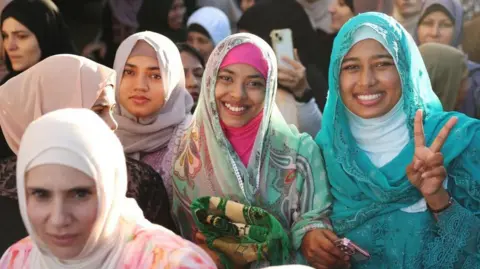
As sunset approached in Sydney’s Lakemba suburb, a vibrant community Iftar filled the street outside the Imam Ali bin Abi Taleb Mosque, where thousands of people gathered to break their daily fast during Ramadan. Families shared boxes of dates and enjoyed dishes like falafel and chicken, embodying the spirit of togetherness and celebration.
Despite the festive atmosphere, a sense of unease lingered. A police surveillance trailer, accompanied by heightened security, underscored rising fears within the Muslim community, particularly following several threats the community has experienced. Gamel Kheir, secretary of the Lebanese Muslim Association, remarked, “We are going through very challenging times... this year is more important than ever” for communal unity.
Recent statistics released by the Islamophobia Register Australia reveal a staggering spike in Islamophobic incidents, with reports surging by 636% since the Hamas attack on Israel in October 2023. Prior to this, incidents averaged 2.5 cases per week; they now exceed 18 weekly. Concurrently, antisemitic incidents have also risen sharply, revealing complex tensions affecting multiple communities within Australia.
The community’s concerns were not alleviated during the visit from Prime Minister Anthony Albanese and Home Affairs Minister Tony Burke, who faced heckling and accusations from worshippers regarding Australia's role in Middle Eastern conflicts and its consequences for local Muslim Australians.
In Lakemba, where over 60% of residents identify as Muslim, locals shared personal experiences of anti-Islamic threats. The area's deeply multicultural fabric, shaped by diverse migrations from Lebanon and beyond, is now confronting the realities of rising intolerance.
As political rhetoric surrounding immigration becomes increasingly charged, many in the Muslim community feel marginalized. Kheir articulated a broader fear of societal regression, suggesting that dominant groups are seeking to reassert themselves at the expense of minority voices. The communal atmosphere in Lakemba serves as a refuge, wherein shared meals reflect hopes for a more inclusive future amidst present challenges.
Skepticism towards the ideal of Australia's multiculturalism is palpable. Dr. Zouhir Gabsi commented, “Multiculturalism... is a politician’s word,” stressing that while communal activities may celebrate diversity, the job market often reflects a continued perception of migrants as outsiders. As the Muslim community navigates these hostile waters, calls for solidarity grow stronger, urging Australian society as a whole to confront the realities of discrimination and embrace a truly inclusive narrative.