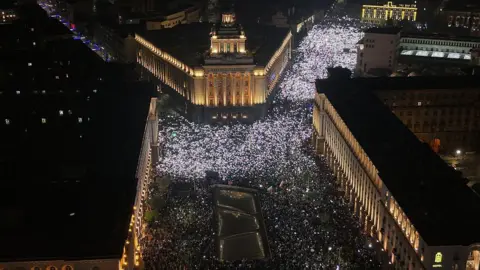
The government of Bulgarian Prime Minister Rosen Zhelyazkov has resigned after protesters took to the streets in cities across the country, filling the center of the capital Sofia on Wednesday night. Zhelyazkov's dramatic move came ahead of a vote of no confidence in parliament, and just 20 days before Bulgaria is set to join the eurozone.
Protesters accused his minority center-right government, which has been in power since January, of widespread corruption. In response to recent demonstrations, the government had already scrapped a controversial budget plan for the upcoming year.
We hear the voice of citizens protesting against the government, Zhelyazkov stated in a televised address. He continued, Both young and old have raised their voices for [our resignation]. This civic energy must be supported and encouraged. A government statement noted that ministers would remain in their roles until a new cabinet is formed.
Estimates from local sources indicate that between 50,000 and 100,000 people participated in the protests, gathering in key areas of Sofia to demand the government's resignation. Messages such as Resignation and Mafia Out were projected onto the parliament building as a clear signal of discontent.
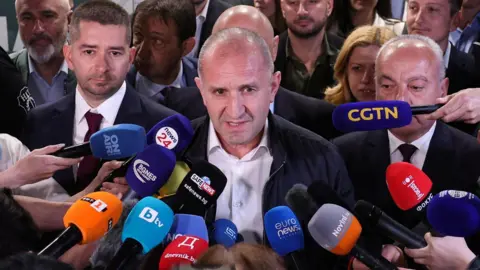
The protests gained momentum with backing from President Rumen Radev, who has also called for the government to step down. Zhelyazkov's government had previously survived five votes of no confidence and was expected to navigate a sixth on Thursday.
Many protesters were particularly angered by the influence of oligarch Delyan Peevski and former Prime Minister Boyko Borissov, whose party played a critical role in government support. Peevski has been sanctioned internationally for alleged corruption, while Borissov, whose party led in the last elections, stated on the same day that coalition parties agreed to remain in power until Bulgaria's eurozone entry on January 1.
Despite the political turmoil, Bulgaria’s transition to the euro is not expected to be jeopardized. In his resignation remarks, Zhelyazkov emphasized the country's urgent challenges and stated that citizens should propose authentic solutions for the next government, highlighting that Bulgaria ranks low in Europe for public sector corruption according to Transparency International.