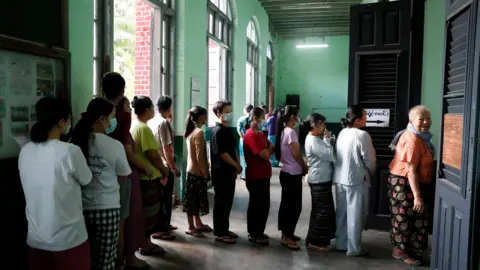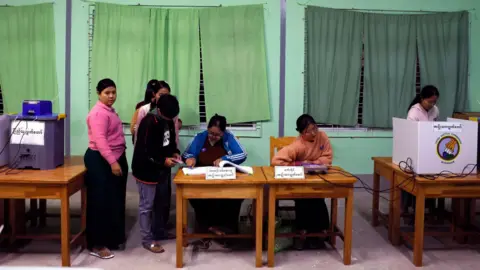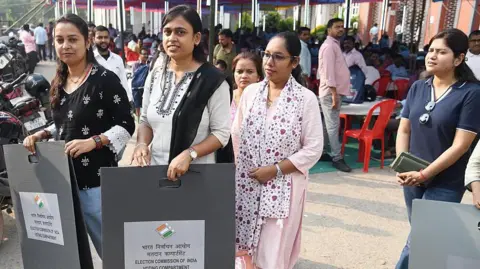
Voting has begun in the eastern Indian state of Bihar where more than 74 million people are eligible to vote in a crucial election that will serve as a precursor to several key state polls.
Voters will cast their ballots for 243 seats in a two-phase election to choose the next state government. Counting of votes is scheduled for 14 November.
The election comes after a controversial revision of electoral rolls that the opposition alleged would exclude genuine voters and give an edge to Prime Minister Narendra Modi's Bharatiya Janata Party (BJP). Both the BJP and India's Election Commission have denied these allegations.
Bihar is one of India's poorest and most populous states, often witnessing mass migrations for employment opportunities. This state is significant as Modi's BJP has not yet formed a government here independently.
The outgoing government is an alliance between the BJP and the Janata Dal (United), or JD(U), who are contesting the elections together. In contrast, the major opposition party, Congress, has allied with the regional Rashtriya Janata Dal (RJD) and several smaller groups.
A new political party led by Prashant Kishor, a prominent political consultant, is also participating in the elections.
This election is particularly significant as it may be one of the last opportunities to see participation from key political figures in Bihar: JD(U)'s Nitish Kumar and RJD's Lalu Prasad Yadav, who have influenced Bihar's political landscape for almost four decades.
Incumbent chief minister Kumar has been a pivotal figure in the state's politics, while Lalu Yadav's legacy includes a governance period marked by controversy. His son, Tejashwi, is projected as the chief ministerial candidate for the opposition alliance.
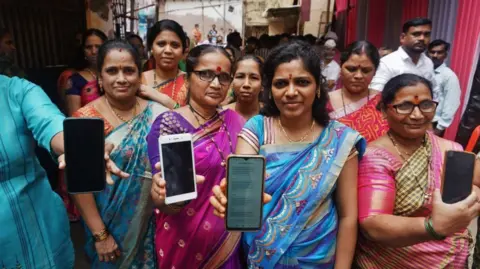
The voter list revision before the election has been contentious, leading to criticism regarding the exclusion of many, particularly from marginalized groups. Analysts suggest that women voters, who constitute nearly half of the electorate, are crucial in this election, prompting all parties to tailor welfare schemes targeting them.
Previous participation has shown that higher voting percentages often correlate with women's involvement. Local advocates like Kushboo Devi emphasize mobilizing women to ensure greater turnout at polling stations.