In brief
C Joseph Vijay, a superstar in Tamil cinema, is making a strategic leap into the political arena by launching his party Tamilaga Vettri Kazhagam (TVK) and stepping back from his film career after his upcoming release 'Jana Nayagan'. This move is contextualized within Tamil Nadu's historical trend of cinema icons venturing into politics. With a significant fanbase and a rhetoric centered on social justice, Vijay aims to resonate with the disillusioned youth voters ahead of the upcoming elections. However, his party's lack of established political infrastructure raises questions about its electoral viability.
India's southern state of Tamil Nadu has a long, peculiar political tradition: here, cinema doesn't merely entertain, it also governs.
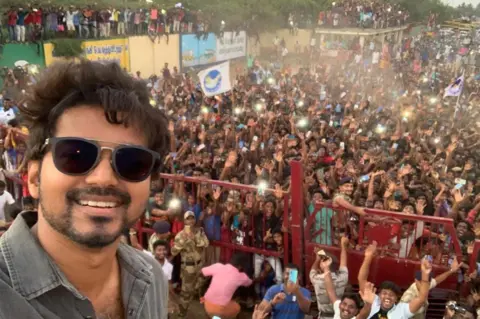
From ex-chief ministers like MG Ramachandran and Jayalalithaa to other prominent figures such as Kamal Haasan and Vijayakanth, the state has seen a regular transition of cinema icons into serious political players. Now, Tamil superstar C Joseph Vijay, known as 'Thalapathy' Vijay, is the latest to join this storied list.
In 2024, he launched his political party, Tamilaga Vettri Kazhagam (TVK), announcing his decision to retire from films in pursuit of full-time politics. His upcoming film, 'Jana Nayagan' (The People's Hero), marks his farewell to the cinematic world.
Vijay's reasoning is straightforward: he insists that politics deserves total dedication, urging that Tamil Nadu's voters merit more than a half-hearted approach. This commitment mirrors the paths taken by his political predecessors, MGR and Jayalalithaa, who wholly withdrew from cinema to dominate Tamil Nadu's political landscape.
'Jana Nayagan', opening across nearly 5,000 cinemas, is steeped in political imagery, featuring dialogues such as, I enter politics not to plunder, but to serve. The film serves not just to entertain, but as a channel for his political message, echoing rhetoric from his campaign speeches against the ruling DMK and the federal government led by Prime Minister Modi.
While Vijay's fame is undeniable, particularly among younger voters disenchanted with decades of Dravidian party rule, his party's actual political substance remains in question. Critics point out that TVK lacks established policies and clear leadership structures, raising skepticism about its readiness to compete effectively.
Tragically, Vijay faced serious challenges recently, including a crowd crush that resulted in the deaths of 40 people during a rally, igniting criticism regarding his party's organization and his leadership response.
As Tamil Nadu’s elections loom, the level of success Vijay's cinematic charisma can translate into political capital remains uncertain. The actor-turned-politician's journey indicates how deeply interwoven cinema and governance are in Tamil Nadu’s culture, but whether that will suffice to secure a meaningful political foothold is a question time will answer.