In brief
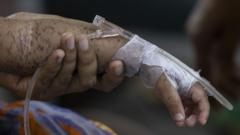
In March 2026, Bangladesh entered a sharp surge of measles cases that have killed more than 500 children. A recent change in the national vaccine procurement process, combined with the disjointed health‑care system and high population density, has intensified the crisis. UNICEF and the national health ministry now carry out a mass vaccination campaign in an effort to curb the outbreak while the government faces criticism for not acting swiftly enough.
[ { "heading": "A personal story in a national tragedy", "para": "The story of six‑month‑old Akira, whose father Al Amin describes as a ‘fast learner’ with a bright future, has become a symbol for the disaster. Despite multiple attempts to vaccinate her against measles—three visits cancelled because lab staff found a cold or claiming the shot was unavailable—Akira contracted the virus. After several readmissions and the complications of acute measles complications, she died 27 days after first admission. Her family suspects hospital exposure, echoing widespread fears of intra‑hospital transmission." }, { "heading": "A staggering morbidity and mortality rate", "para": "According to Bangladesh’s Ministry of Health, more than 60,000 suspected cases have been reported in just over two months. Confirmed lab results show 518 child deaths, a figure that more than doubles the estimated 200–300 fatalities seen in comparable past outbreaks. UNICEF records that parents are scrambling for space within hospitals, often only receiving care after a long wait—highlighting a systemic crisis in primary‑care delivery." }, { "heading": "The chain of delays: a faulty vaccine supply line", "para": "UNICEF’s chief, Rana Flowers, traced the outbreak’s explosive growth to a series of procurement delays under the interim government that came to power after the resignation of former leader Sheikh Hossain. A new vaccine acquisition system, announced in February 2026, caused three months of ordering and shipping gaps. “We had ten meetings to warn about the risk of a shortage,” Flowers said, noting that the system failed to keep a steady and reliable channel between the national vaccination program and international suppliers. Simultaneously, the COVID‑19 pandemic had eroded door‑to‑door vaccination campaigns, leaving pockets of unvaccinated children." }, { "heading": "Massive movement during Eid: a game‑changer", "para": "The mis‑alignment of the measles outbreak with the Eid celebrations—when thousands of families travel across cities—has increased the probability of cross‑sectional infection. Dr Mushtaq Husain, a former principal officer at IEDCR, warned that poor families usually postpone trips until the end of the holiday owing to high costs, thereby pushing them into the final weeks of the outbreak when cases are at their peak." }, { "heading": "Government response – emergency vaccination and resource allocation", "para": "Responding to media and UN warnings, Bangladesh’s Ministry of Health announced an emergency vaccination program starting early April. With international cooperation, UNICEF and local authorities conducted nationwide distribution of measles vaccine for children under five. While the campaign has begun to flatten infection curves in prioritized areas, vaccine action is time‑lagged, requiring 3–4 weeks to generate protective antibodies. Health Minister Sardar Sakhawat Hossain downplayed the need for a declared emergency, citing district‑level hospitals’ “preparedness” and the deployment of additional ICU resources to remote regions." }, { "heading": "The road ahead – systemic reforms and sustained vigilance", "para": "The measles epidemic underscores persistent gaps in Bangladesh’s health system: under‑resourced local clinics, the breakdown of a door‑to‑door vaccine model, and the fragility of its procurement mechanism. NGOs and UN agencies call for a re‑establishment of a long‑term, collaborative vaccine‑supply chain contract and for a robust emergency response protocol, especially in densely inhabited localities such as Dhaka and Cox’s Bazar. The current crisis is a stark reminder that health security is not merely a medical concern but a foundational component of climate‑resilient, sustainable communities." } ]