In brief
Australia and the EU have finalized a comprehensive trade agreement after eight years of negotiations. The deal aims to boost cooperation in various sectors, including agriculture and defense, while addressing the changing global landscape and fostering economic resilience. Though hailed as a win by leaders, the agreement has faced criticism from farmers concerned about export quotas. The partnership highlights strategic collaboration in critical minerals like lithium, as both parties search for a stable footing in unpredictable geopolitical waters.
Australia and the European Union have agreed on a sweeping free trade deal after eight years of negotiations.
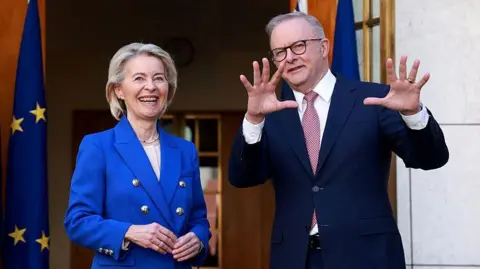
The deal signed in Canberra is worth about A$10 billion ($7 billion; £5.2 billion) and was described as a mutual 'win-win' by Australia's Prime Minister and the visiting European Commission President Ursula von der Leyen.
Von der Leyen emphasized the agreement's focus on 'collective resilience' in a rapidly changing world.
The pact removes nearly all tariffs on trade and facilitates enhanced cooperation on defense and critical minerals.
While European car manufacturers have welcomed the deal, agricultural producers in both regions expressed concerns regarding the agreed export quotas for Australian beef and lamb. Moreover, the amount of Australian beef permitted into the EU is set to increase more than tenfold over the next decade, with mixed reactions from Australian farmers.
The agreement showcases the EU's strategy to diversify its trade relationships in light of shifting geopolitical dynamics, highlighted by von der Leyen's remarks on the vulnerabilities of global supply chains.
The deal not only facilitates smoother trade in agricultural products but also sets the stage for greater collaboration on defense, critical minerals like lithium, and counter-terrorism initiatives. This partnership is a significant step towards navigating the future landscape of international trade and cooperation.