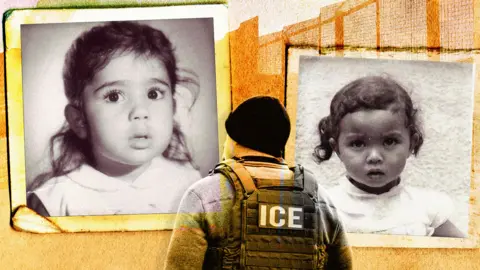
Shirley Chung was just a year old when she was adopted by a US family in 1966. Born in South Korea, her birth father was a member of the American military, who returned home soon after she was born. Unable to cope, her birth mother placed her in an orphanage in Seoul.
After around a year, Shirley was adopted by a US couple and taken to Texas. Growing up like many American children, she attended school, got her driving license, and grew up during the 80s without questioning her American identity until 2012, when she discovered she lacked US citizenship.
Shirley is not alone. Estimates suggest that between 18,000 to 75,000 American adoptees lack citizenship, and some face deportation threats. A tragic case involved a man who was deported to South Korea, leading to devastating consequences.
Many adoptees found their identities challenged when they attempted to obtain documents reinstating their citizenship, with some facing loss of critical documentation during transitions in immigration policy.
Notably, the Child Citizenship Act of 2000 aimed to provide citizenship to future adoptees but failed to cover those who arrived before February 1983, leaving many in limbo.
As immigration policies during the Trump administration tighten, fears have surged among adoptees, with many going into hiding. Advocates argue fervently for legislative change to protect these individuals who were promised citizenship.
Emily Howe, a civil rights attorney, emphasizes that adopted children should have equal rights to citizenship just like their biological siblings. She and others urge that rectifying this is not only a matter of justice but of fulfilling the promises made during their adoption.
Shirley voices her plea directly to President Trump, asking for recognition and compassion for adoptees who only seek the rights that were promised to them as children.