In brief
Typhoon Noul’s landfall has highlighted an alarming trend: AI‑generated videos that spread misinformation during natural disasters. Flood‑related footage—showing dead bodies, false evacuation scenes or fictitious wildlife releases—has sparked panic and misdirected relief efforts. Chinese authorities are tightening regulation, arresting creators and demanding “AI tags” on content, yet the technology spreads faster than legal frameworks. Experts warn that citizens must rely on vetted sources and that platforms must pre‑emptively filter harmful material. The widening gap between AI innovation and information integrity poses a pressing risk to disaster resilience.
China’s flood crisis is digitalised by AI war‑py
and misinformation
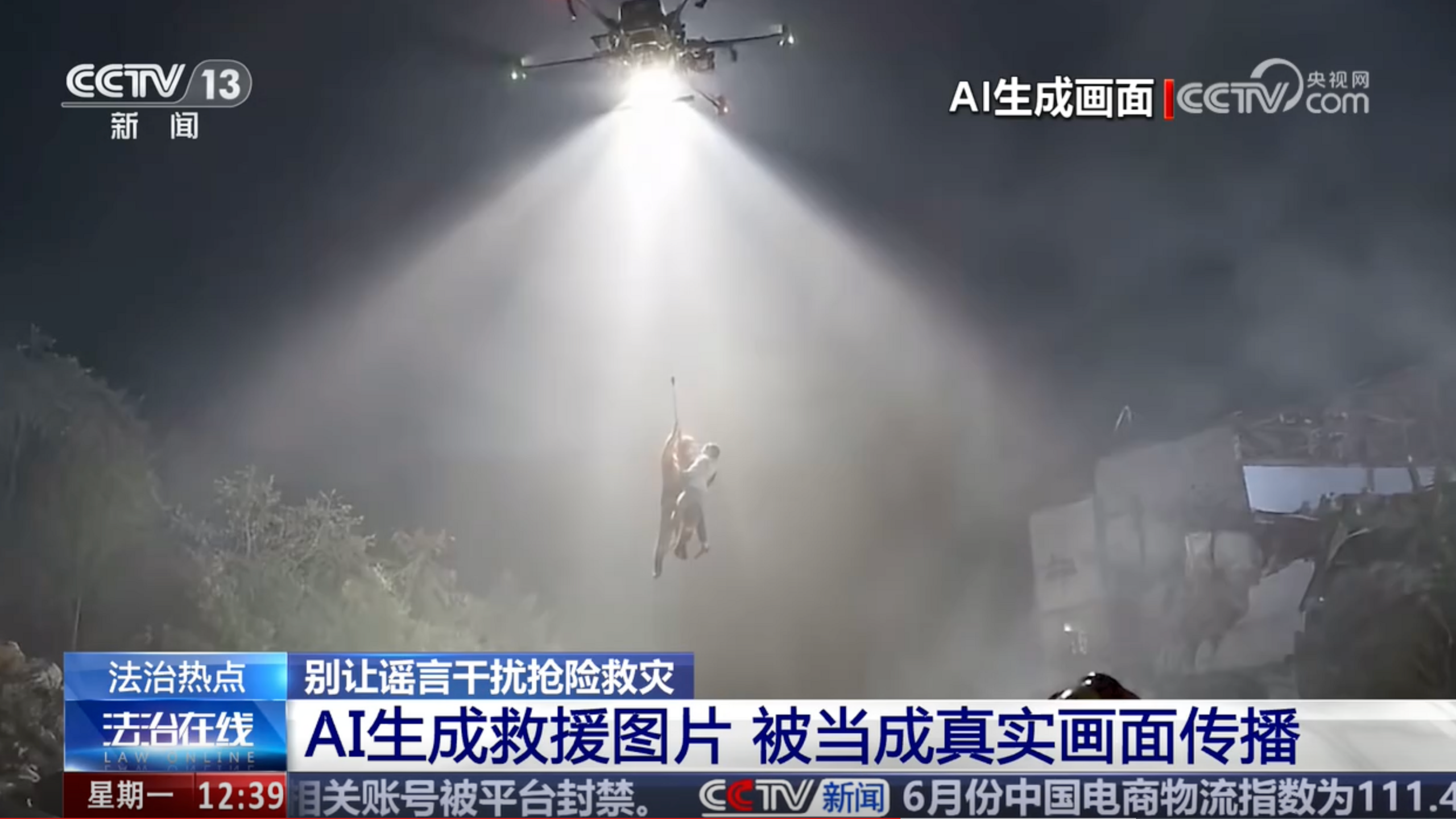
The heavy rains and floods that hit China last week around Typhoon Noul have exposed a growing threat beyond the water‑logged streets: a wave of AI‑generated videos that mislead the public and jeopardise rescue efforts.
Social media is re‑pushed by clips that claim to depict dead bodies drifting in floodwaters, exaggerated damage in unaffected towns or staged rescue scenes. Such footage has spurred panic buying of emergency supplies, while some residents even blamed authorities for “prioritising pigs over people” in the chaos.
“Those who create these videos do it for attention or profit, or to spark panic,” said Huang Zhihua, deputy chief of online public security in Zhejiang. He added that the state has already begun detaining creators, imposing fines and prosecuting offenders.
The surge is linked to China’s aggressive AI push. Over 6,000 domestic AI companies now compete for funding, making advanced generation tools widely available. Researchers warn that AI lowers the entry barrier: a casual user can now produce realistic video, audio or text with simple prompts.
Experts such as Professor Chen Bin and Professor Gao Fuping call for mandatory AI‑tags, stricter verification of geolocations and timestamps, and a “trusted information infrastructure” that links government alerts with news outlets.
Nonetheless, tech gaps remain. Detection systems lag behind generation innovations, “we’re in a constant cat‑and‑mouse game,” warned Professor Xu Xiaoke, noting that any detection must be complemented with public trust and education.
On 23 July, the Cyberspace Administration launched a nationwide crackdown on fake content linked to floods, ordering local branches to identify fabricated data, staged scenes and impersonations. Police are also creating a specialised task force to monitor short‑video platforms and expeditiously address misinformation cases.
Despite legal frameworks, the tempo of AI‑generated misinformation outpaces regulation. “The structure of the law is still behind the pace of technology,” admitted Professor Chen. Meanwhile, lawyers like Peter Pang argue that holding both creators and platforms accountable will be crucial to curb the spread of panic‑inducing media.
The public’s media literacy remains a critical frontline. Authorities urge residents to “approach unknown disaster reports with scepticism and rely on official announcements.” They also stress that the cost of AI mis‑use lies not in the technology itself but in how it is exploited.
Looking forward, climate experts warn that AI‑driven misinformation will grow faster, especially around elections, public‑health emergencies and natural disasters. Governments and platforms must therefore pre‑emptively reinforce measures instead of reacting to viral falsehoods.
In short, as China’s typhoon season rolls on, emergency officials are now threading an extra line in their crisis‑communication manuals: guard against the unseen flood of AI‑fabricated videos that could drown better‑planned relief operations.