In brief
The U.S. government has agreed to take a small equity stake in Lithium Americas, the company developing the Thacker Pass lithium mine in Nevada. This deal, which involves a restructuring of an existing $2.3 billion federal loan, aims to enhance domestic lithium production vital for electric vehicle batteries. Despite ongoing environmental concerns, both Republican and Democrat leaders support the project to decrease reliance on foreign lithium sources, particularly from China.
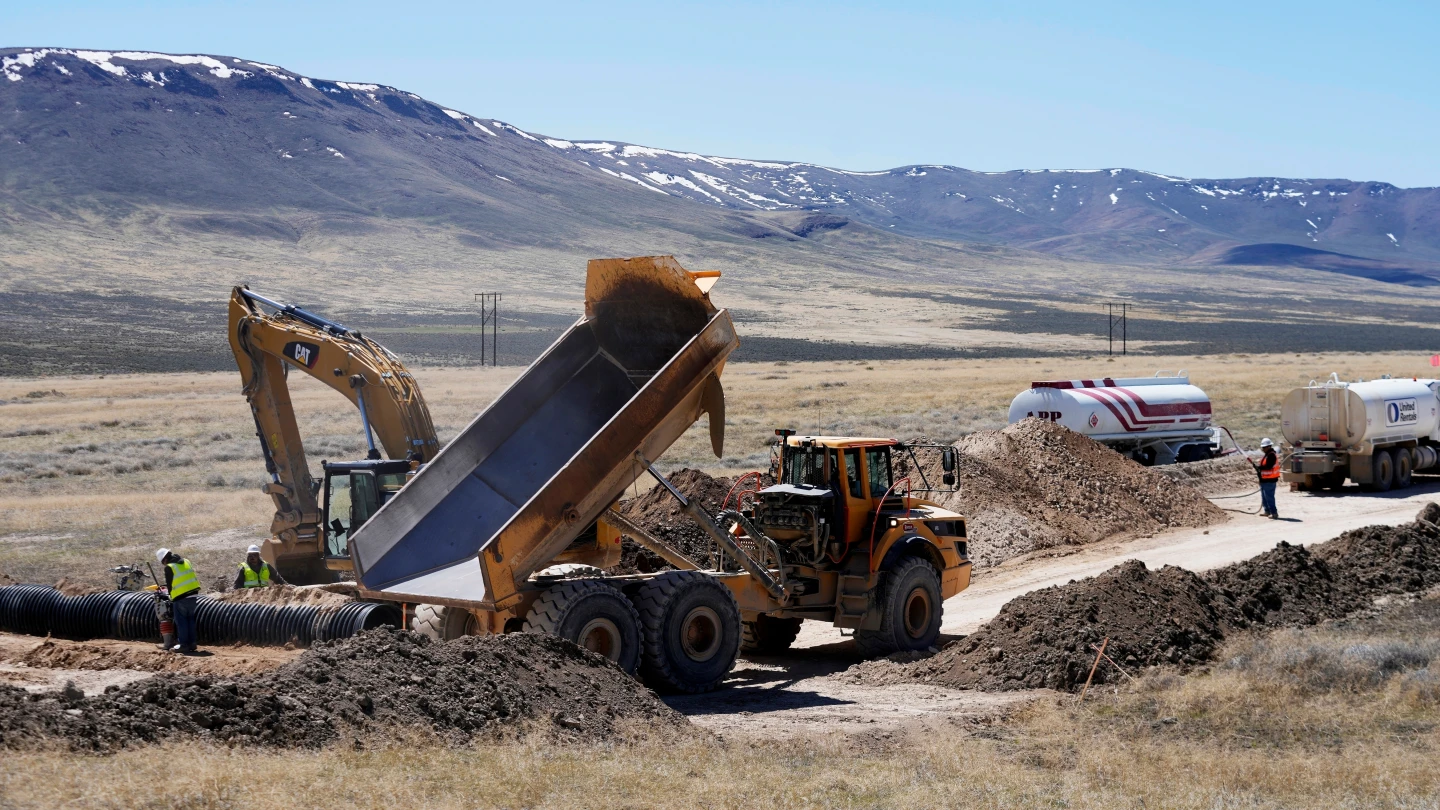
WASHINGTON (AP) — In a significant step forward for domestic energy production, the Biden administration has finalized an arrangement to take a small equity stake in Lithium Americas, the company behind the Thacker Pass lithium mine located in northern Nevada, approximately 200 miles north of Reno.
The Department of Energy's involvement signals a commitment to bolstering U.S. lithium supply, crucial for electric vehicle (EV) batteries. The revised agreement involves a restructuring of a $2.3 billion federal loan aimed at kick-starting the mining process for lithium, a key component for transitioning to greener technologies.
General Motors has already pledged over $900 million to support the development of Thacker Pass, projecting that the mine can produce enough lithium to manufacture one million electric vehicles annually.
Officials indicated that the U.S. stake in Lithium Americas will be minimal—less than 10%—serving primarily as a safety net for the company's financial operations. This model reflects a broader strategy where the government intervenes in private enterprises—echoing previous investments in companies like Intel and MP Materials, aligning fiscal policies with national interests.
Supporters of lithium production argue that it is pivotal for the U.S. economy and creating jobs within domestic manufacturing, especially regarding critical minerals vital for tech and energy shifts. A senior official highlighted, Critical minerals like lithium are very important to boost the U.S. economy and restore domestic manufacturing,” further stating a commitment to ensuring taxpayer interests are preserved in these dealings.
However, the project has faced considerable opposition from environmentalists and Native American tribal leaders, citing historical and environmental concerns related to the mine's location. Previous negotiations aimed at balancing ecological integrity with economic development highlight the ongoing discourse surrounding sustainable mining practices.
Thacker Pass is projected to produce 40,000 metric tons of battery-quality lithium carbonate per year when fully operational, enough to support electric vehicles and contribute positively to the green energy transition. As U.S. electric vehicle sales begin to slow, pushing for a sustained domestic supply chain appears essential in maintaining progress toward EV adoption.
While both political parties have shown support for the project as a strategic move to minimize dependence on foreign lithium processors, concerns remain about transitioning to sustainable practices without sacrificing environmental integrity.