
In brief
This article explores how Indian artists have creatively interpreted the nativity, intertwining Islamic and local artistic traditions with themes of Christianity.
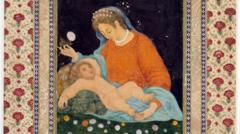
In a remarkable fusion of cultural and artistic styles, Indian artists have brought fresh perspectives to the depiction of Jesus Christ’s birth, traditionally grounded in Western art. This innovative approach challenges the Western-centric narratives and constructs a unique visual language that resonates with India's diverse cultural landscape.Historically, the introduction of Christianity to India is often attributed to Mughal Emperor Akbar, who welcomed Jesuit missionaries and their artistic contributions to his court. This coalescence of beliefs paved the way for a body of work that recurrently blends Western Christian themes with Islamic artistry prevalent in the region.According to Neha Vermani, a South Asian historian, Mughal court artists created distinctive nativity paintings which featured the likes of Emperor Jahangir himself alongside Mary, Joseph, and the infant Jesus. This portrayal highlighted the Mughal sovereignty's ethos of inclusivity, reflecting a world where multiple religions could coexist harmoniously. Among the notable figures in this artistic reimagining is Jamini Roy, born in 1887 in West Bengal. Roy's work is characterized by his nuanced integration of Bengali folk art and Kalighat styles, elevating Jesus's representation alongside local figures and symbols. As articulated by Ashish Anand, the CEO of art firm DAG, Roy saw Christ's humility and sacrifice mirrored in the life of the Santhal community, prompting him to paint in a style that was as significant for Christian themes as for Hindu iconography.Angelo de Fonseca, another prominent Indian artist born in 1902 in Goa, also pioneered a subversive approach to Christian iconography. De Fonseca depicted Mary as an Indian woman, challenging conventional western portrayals of biblical figures. His artworks sought to reposition Christianity within the Indian cultural narrative rather than allowing it to remain perceived solely as a Western tradition. Rinald D'Souza from the Xavier Centre of Historical Research noted that de Fonseca’s watercolors were an expressive attempt to recontextualize Christianity in India.Through their art, these Indian artists not only celebrate the birth of Jesus but also elevate local narratives and identities, creating a rich tapestry that redefines the scope of Christian iconography in Indian art history.