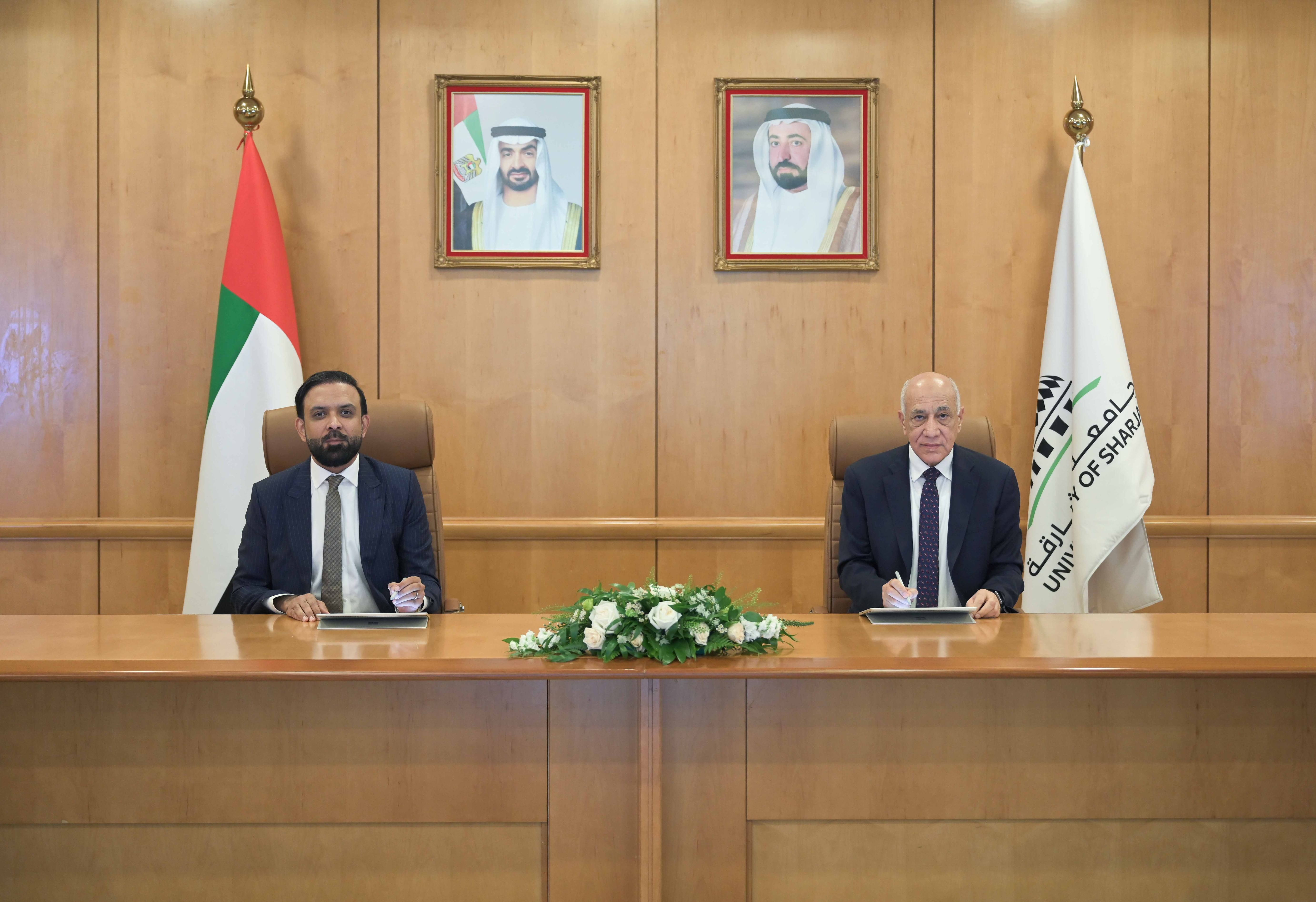
On 1 November 2026, the University of Sharjah (UOS) and Aafaq Islamic Finance sealed a long‑term partnership that will span scholarships, training, employment programmes, research collaboration and community‑focused initiatives. The signing took place at the university campus, where Chancellor Prof. Esameldin Agamy and Aafaq chief executive Othman Basit were present to outline the scope of the cooperation.
Partnership Objectives
The agreement is conceived as a response to the growing demand for joint action by academia, industry and finance to tackle the complex challenges of the twenty‑first century. Prof. Agamy voiced that "cooperation among higher education, industry, and the financial sector has become increasingly urgent as education evolves to meet society’s needs". He added that "global challenges cannot be addressed by any single sector alone". This perspective anchors the partnership as a multi‑disciplinary platform that aims to give students immersive exposure to real‑world workplace dynamics while simultaneously fostering research that strengthens academic knowledge.
"We are proud to collaborate with the University of Sharjah, and through this agreement we look forward to providing practical training opportunities for students, supporting educational initiatives, and strengthening the exchange of knowledge and expertise."
Across the room, Othman Basit underscored that supporting education and empowering young people were core priorities within Aafaq’s corporate social responsibility framework. He highlighted that Aafaq will become one of the university’s formal student funding partners, providing both financial assistance and scholarships to enable eligible students to continue their education.
Benefits for Students
The partnership offers a multi‑layered support package for students. Scholarships will provide crucial financial relief, reducing barriers to higher‑education access. Training programmes are designed to place students in industry settings where they can observe and participate in day‑to‑day operations, thereby enhancing the practical skills demanded by employers. These hands‑on experiences were described by Prof. Agamy as essential for aligning academic learning with workplace expectations, thus facilitating smoother transitions into the workforce after graduation.
Employment programmes, another cornerstone of the agreement, will open pathways for graduates to secure roles within Aafaq and the wider finance sector. By aligning student capabilities with industry needs, the partnership aims to fill skill gaps in the financial services arena while simultaneously contributing to sustainable economic practices. The scholarship component also promises to widen access for under‑represented groups, thereby fostering greater diversity across the student body.
In addition, the collaboration signals a commitment to community development. Both parties stated that the partnership will extend beyond the classroom and into community‑focused initiatives. These initiatives are expected to involve students in projects that directly address local environmental or social concerns, giving them the chance to apply their learning in tangible ways. The involvement of a financial institution in this context reinforces the notion that sustainable practices can be profitable and socially responsible.
For research, the agreement explicitly mentions cooperation in studies related to Islamic finance, financing solutions, and advisory services. As such, faculty and students will have the opportunity to engage in joint research projects, produce academic publications, and contribute to the evolving body of knowledge that interlinks financial development with environmentally sustainable outcomes. By integrating Islamic finance objectives—principally, the avoidance of interest and the promotion of risk sharing—with environmental stewardship, the partnership aspires to create financial models that are not only profit‑oriented but also climate‑conscious.
With the University recognising Aafaq as a student funding partner, the collaboration also includes a formal acknowledgement of the financial institution’s role in supporting higher education. This formal recognition effectively institutionalises the partnership, giving it a lasting impact while offering students a clear pathway to obtain funding and training.
Overall, the University of Sharjah and Aafaq Islamic Finance partnership represents a concrete step toward integrating environmental and social goals within higher‑education structures. By marrying scholarship provision, immersive training, employment pathways, research collaborations and community service, the agreement seeks to empower a new generation of professionals whose expertise will enable sustainable community development in an increasingly complex world.