In brief
On 31 October 2026, the Ministry of Foreign Affairs in Abu Dhabi hosted a second diplomatic briefing to rally ambassadors and representatives of international organisations in anticipation of the 2026 United Nations Water Conference. The gathering aimed to reinforce commitments to water security, investment, and multilateral cooperation in a conference that will be the third of its kind in five decades and the first focused solely on Sustainable Development Goal 6.
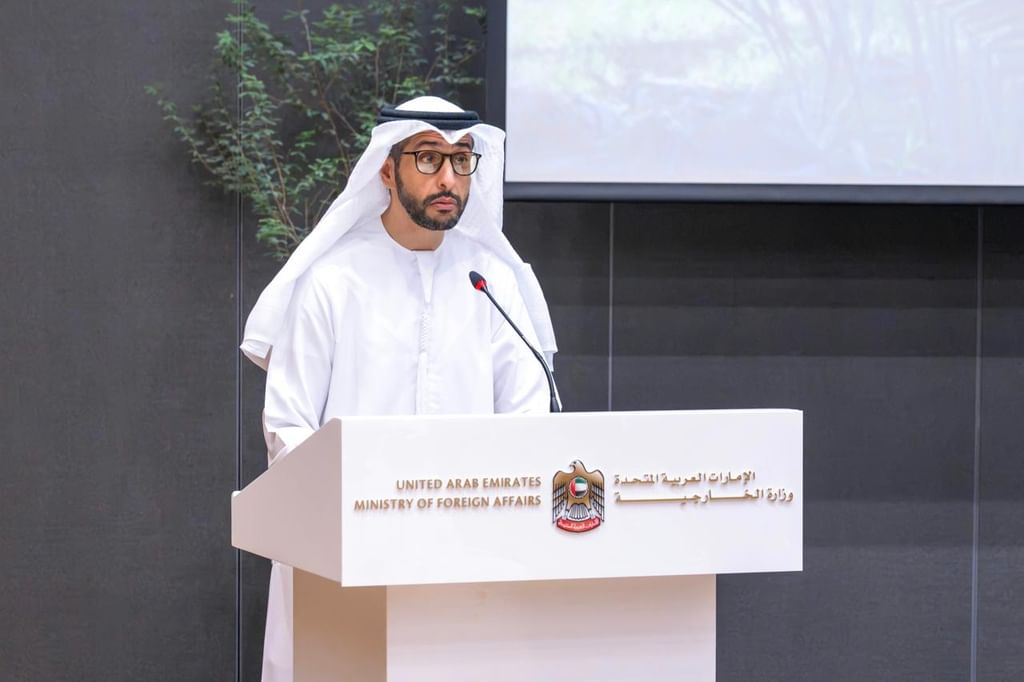
On 31 October 2026, the Ministry of Foreign Affairs in Abu Dhabi convened a second diplomatic briefing at the Anwar Gargash Diplomatic Academy, inviting ambassadors, Deputy Chiefs of Mission, and representatives of international organisations to discuss the forthcoming UN Water Conference scheduled for 8–10 December 2026 in Abu Dhabi and Dakar. This event followed a first briefing on 14 May 2026 that attracted over 150 participants; the second drew 180 representatives, marking an expanded engagement in the diplomatic community.
The conference, co-hosted by the United Arab Emirates and the Republic of Senegal, is the third UN Water Conference held in 50 years and the first that is explicitly dedicated to the implementation of Sustainable Development Goal 6. SDG 6 calls for the availability and sustainable management of water and sanitation for all, a target that has gained urgent attention amid escalating climate pressures and water scarcity.
At the briefing, Assistant Minister of Foreign Affairs for Energy and Sustainability Abdulla Balalaa, who led the meeting, outlined the conference’s program, highlighted six interactive dialogues, and detailed participation modalities and logistical arrangements. He emphasized the need for practical outcomes such as increased investment, reinforced political commitments, and the development of technical solutions that can directly improve lives, restore ecosystems, and expand access to water and sanitation.
Known as a milestone in diplomatic‑environmental coordination, the second briefing underscored the UAE’s strategy to transform dialogue into action. The conference agenda will feature sessions on climate‑resilient water infrastructure, innovative financing mechanisms for water projects, and best‑practice case studies from across the globe. Speakers will also explore synergies between water and energy sectors, the role of technology in water monitoring, and pathways to scale up community‑driven water management initiatives.
In a realm where water scarcity increasingly threatens food security, public health, and economic stability, the UAE’s outreach to its diplomatic network represents a concerted effort to mobilise global resources for large‑scale and local projects alike. Participants are encouraged to present national priorities, share technical expertise, and forge partnerships that can accelerate the delivery of critical water systems, particularly in arid and semi‑arid regions where data highlighted ongoing shortages.
Attendees also addressed logistical planning for the conference, including accommodation, transportation, and security measures for delegates. The Ministry of Foreign Affairs communicated that the UAE’s infrastructure will support a diverse array of participants, ensuring that even the most technologically advanced nations and those with limited resources can engage effectively.
The call for active participation resonates with the wider international community’s push for integrated water governance. By positioning the UN Water Conference as an opportunity for tangible investments, the UAE hopes to secure commitments from financial institutions, private investors, and development agencies that can translate pledges into on‑the‑ground projects.
This initiative aligns with the UAE’s broader sustainability framework, which includes ambitious national water efficiency targets, desalination projects powered by renewable energy, and partnerships with academic institutions to develop water‑saving technologies. The country’s participation in the conference also highlights its role as a regional leader in adapting to climate change, exemplified by its continued investment in climate‑resilient infrastructure across the Gulf Cooperation Council.
While the briefing did not include a specific public statement from any donor or multilateral agency, the emphasis on cross‑sector collaboration mirrors the expectations of international environmental actors. Stakeholders anticipate that the outcomes of the UN Water Conference will set the stage for a 2026 Water Summit that transcends traditional diplomacy and integrates actionable solutions to coastal erosion, rising sea levels, and groundwater depletion.
As the world watches the UAE’s diplomatic engagement, the broader implication is clear: water security is intertwined with climate resilience, economic stability, and sustainable livelihoods. The conference aims to provide a platform for countries of all income levels to share knowledge, co‑create innovative financing models, and strengthen governance mechanisms that protect water resources for current and future generations.
In closing, the second diplomatic briefing in Abu Dhabi marked a pivotal moment in the lead‑up to the UN Water Conference, signalling the UAE’s commitment to galvanise the global community around one of the planet’s most pressing environmental challenges. The outcome of this effort will shape not only the next steps in water governance but also the trajectory of global sustainability metrics related to water and sanitation.