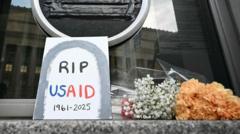
In a move that has sent shockwaves through the global health community, the U.S. administration's recent suspension of funding for the United States Agency for International Development (USAID) threatens to unravel critical health initiatives worldwide. President Trump's administration has decided to conduct a 90-day review of the agency aimed at aligning its funding priorities with an "America First" approach, effectively halting numerous aid programs that are essential for combating health crises globally.
This funding freeze effectively stalls tens of billions of dollars that USAID allocates annually to diverse health projects, including crucial programs that fight diseases like tuberculosis (TB) and HIV/AIDS. Health specialists have warned that this interruption could jeopardize vital treatments, delay vaccine development, and ultimately contribute to the rising tide of preventable diseases. With the internal reviews underway, many NGOs that rely on the federal funds are left in a state of uncertainty, unable to continue their essential services.
Dr. Tom Wingfield, a prominent tuberculosis expert at the Liverpool School of Tropical Medicine, highlighted the widespread implications of dismantling such programs. Describing the situation as a potential public health crisis, he noted that disruptions in services and funding could lead to increased transmission of diseases across borders, particularly in the context of growing climate change challenges and the movement of populations.
The precarious situation has been echoed by organizations like Frontline AIDS, which reported that over 20 partner organizations globally are feeling the impact of the funding freeze, resulting in disrupted access to critical healthcare, such as HIV treatment and prevention services. Communication lapses regarding the fund's freeze have caused confusion and gridlock among these partners, leading to layoffs and a halt on life-saving programs.
Experts are especially concerned about the effects this funding pause will have on the ongoing battle against diseases like malaria and HIV, which depend heavily on USAID funding. Prof. Thomas Jaki of the University of Cambridge warned that many international clinical trial projects, which are pivotal to advancing treatment options, might be forced to halt or face severe delays, potentially stalling progress in crucial areas.
Furthermore, Prof. Rosa Freedman of the University of Reading pointed out that the freeze could reverse years of progress in global health initiatives. The long-term ramifications could lead to a resurgence of controllable diseases, such as cholera, in regions where health programs have already seen success.
As national borders become increasingly porous in a globalized world, health experts agree that the ramifications of this funding freeze will not just affect specific nations but could also lead to a broader global health crisis. They emphasize that further investment in international aid is crucial, not only for the welfare of the affected populations but also for safeguarding global health standards against potentially resurgent infectious diseases.