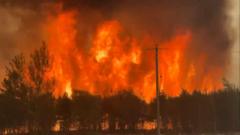
Military aircraft and helicopters have been deployed to aid in the evacuation of residents from the rapidly spreading wildfires in Manitoba, Canada. Thousands have already fled the central prairie provinces, particularly Saskatchewan and Manitoba, as firefighters battle the flames amid forecasts predicting hot and dry weather for the upcoming days. Currently, over 180 wildfires are active across Canada, with smoke engulfing large regions and affecting air quality as far down as the United States.
With Manitoba and Saskatchewan declaring states of emergency for the next month, both provinces have called for international assistance to combat the raging fire crisis. Aerial footage illustrates massive smoke plumes billowing into the sky, a stark reminder of nature’s fury. The evacuations have become increasingly urgent, especially for the northern First Nations community of Pukatawagan, where Manitoba officials described the situation as "rapidly evolving." Over 2,000 residents remain in need of transportation out of this area.
In Flin Flon, Manitoba, a town with approximately 5,000 residents, only firefighters and support personnel are currently present, as mandatory evacuations have cleared the area. Disturbingly, 25 active fires are reported within Manitoba alone, with 10 classified as out of control.
While Manitoba bears the brunt of this disaster, Saskatchewan also grapples with the wildfire crisis, featuring 16 ongoing fires, seven of which are still uncontained. Meteorologist Danielle Desjardins from Environment and Climate Change Canada cautioned that the forecast is grim. A cold front is expected to sweep through some regions of Saskatchewan, but it will not provide relief where the fires rage. Rather, it brings wind that could exacerbate the existing conditions to facilitate the spread of flames further.
Furthermore, smoke from these infernos has had a ripple effect, placing around 22 million Americans under air quality warnings this weekend. States like Michigan and Wisconsin have issued advisories, while northern Minnesota is bracing for unhealthy air quality levels affecting all residents.
Canada has already experienced its most catastrophic wildfire season on record in 2023, with more than 42 million acres (17.3 million hectares) affected. While wildfires are a natural occurrence in many regions, climate change is influencing weather patterns, leading to conditions that better facilitate wildfires. Extreme heat continues to draw moisture from the soil and vegetation, worsening the ongoing situation and highlighting the urgent need for sustainable practices and climate advocacy moving forward.