
In brief
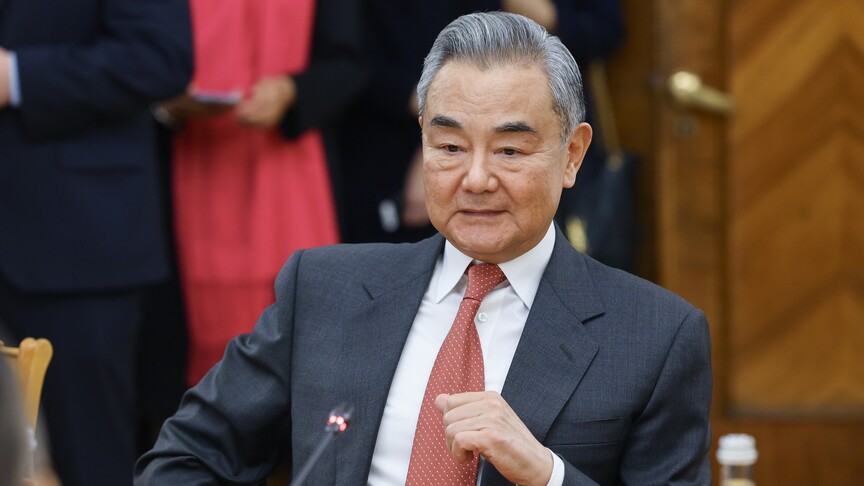
In Beijing on a historic 55‑year anniversary of bilateral relations, China’s Foreign Minister Wang Yi and Iceland’s Thorgerdur Katrin Gunnarsdottir pledged deeper collaboration across trade, geothermal energy, green transition, marine affairs and the Arctic. The meeting highlighted China’s commitment to multilateralism and Iceland’s readiness to upgrade their free‑trade agreement, with plans for joint research and talent exchange.
During a historic 55‑year celebration of diplomatic ties, China’s Foreign Minister Wang Yi met Iceland’s Foreign Minister Thorgerdur Katrin Gunnarsdottir in Beijing, announcing a series of new agreements to strengthen cooperation in trade, geothermal power, the green transition, marine affairs, and the Arctic.
The talks came as Iceland’s delegation is scheduled to travel to Qingdao in Shandong province for a seafood expo, a move that signals the deepening of economic ties between the two countries. A free‑trade agreement signed in April 2013, effective July 1 2014, has made China Iceland’s largest trading partner in Asia, with bilateral trade reaching $443 million in 2024.
Wang emphasized that China is “willing to share development opportunities with Iceland, explore cooperation potential, strengthen cooperation in areas such as trade and economy, geothermal energy, green transformation, marine affairs, and the Arctic.” He called for enhanced exchanges in tourism, joint scientific research and talent cultivation, and urged the promotion of people‑to‑people bonds.
China is willing to share development opportunities with Iceland, explore cooperation potential, strengthen cooperation in areas such as trade and economy, geothermal energy, green transformation, marine affairs, and the Arctic.
Gunnarsdottir, who has been on a multi‑day visit to China, confirmed Iceland’s readiness to actively work with China on upgrading their free‑trade agreement and continuously deepen cooperation. She highlighted Iceland’s interest in new avenues for research on climate resilience and sustainable fisheries, especially in the context of Arctic maritime routes.
Both officials underscored the importance of multilateralism and the rule of international law. Wang noted that “both sides should strengthen cooperation, jointly uphold multilateralism, the rule of international law, and the core role of the United Nations in international affairs, promote the building of a more just and equitable global governance system.”
The meeting also touched on the ocean economy. Wang suggested that the two countries collaborate on sustainable marine resource management, noting the growing importance of the Arctic’s marine corridors for global shipping and biodiversity.
In terms of geothermal energy—a sector where Iceland is a world leader—China expressed keen interest in technology transfer. Wang referenced Iceland’s pioneering geothermal plants as a model for China’s own push to diversify renewable energy sources.
China’s focus on the green transition aligns with global efforts to reduce carbon emissions. The diplomats discussed joint research initiatives that could explore cleaner, low‑carbon fuels and the deployment of green hydrogen production along the coast of Iceland.
At the 55‑th anniversary of the two nations’ diplomatic relations, the visit also celebrated 55 years of cultural and people‑to‑people exchanges. Both parties agreed to broaden tourism initiatives, creating more opportunities for Minnesota‑sized research projects and student exchanges.
Climate‑change advocacy groups in Iceland highlighted the significance of the partnership. They welcomed the potential for collaborative research on sea‑level rise and ice‑sheet monitoring, offering unbiased data that can inform global policy.
Meanwhile, Chinese environmental NGOs saw the agreement as a platform to share best practices on sustainable coastal development, particularly concerning Iceland’s unique fjord ecosystems.
The announcement was reported by Anadolu Agency, Dimsum Daily and the Herald Globe, all noting the extensive scope of plans: from renewable energy to Arctic navigation safety and from marine biodiversity to tourism development.
In a broader context, this cooperation comes amid heightened international attention on Arctic governance. China’s involvement signals a shift from economic pursuits to higher‑order environmental diplomacy aimed at preserving the fragile Arctic ecosystem.
Both countries expressed optimism that the expanded partnership could lead to tangible outcomes in the near future, such as joint scientific expeditions to the Greenland Sea and co‑developed policies for sustainable fisheries in the North Atlantic.
In the final part of the meeting, Wang reiterated China’s desire to promote a “more just and equitable global governance system,” emphasizing the role of small, environmentally advanced nations like Iceland in shaping global climate policy.
With the next phase of collaboration tentatively scheduled for early 2026, analysts predict that the China‑Iceland partnership will set a precedent for other small states to collaborate with major economies on large‑scale environmental projects.


