In brief
Irawati Karve's groundbreaking research and her courageous defiance of societal norms have left an indelible mark on anthropology and women's rights in India.
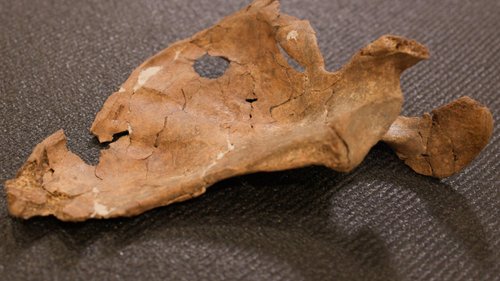
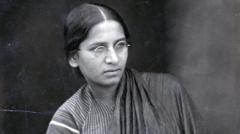
Irawati Karve, a prominent figure in Indian anthropology, was born in 1905 in Burma (now Myanmar) and has largely remained an unsung heroine in history. Breaking the norms of British-ruled India, where women's rights were severely limited, she pursued higher education abroad, becoming the first female anthropologist in India and a college professor. Her daring pursuit included swimming in a bathing suit, choosing her husband, and taking on racist theories proposed by her doctoral supervisor, Eugen Fischer.A new book, “Iru: The Remarkable Life of Irawati Karve,” authored by her granddaughter Urmilla Deshpande and academic Thiago Pinto Barbosa, paints a picture of her extraordinary life filled with challenges and triumphs. Growing up as the only girl among six siblings, Irawati was cherished by her family. Influenced by strong women and progressive men, she had access to educational opportunities that were scarce for girls of her time.At just seven years old, she was sent to a boarding school in Pune, where she met RP Paranjpye, an influential educationist who became her guardian and encouraged her pursuit of knowledge. Under his mentorship, she developed a deep interest in social sciences, reinforcing her desire to challenge societal boundaries.In 1927, Irawati ventured to Berlin to pursue a doctorate in anthropology, defying her biological father's objections with support from Paranjpye and her husband, Dinkar Karve. Amidst the rising tide of anti-Semitism in Europe, she observed horrifying events, including the murder of a Jewish student in her neighborhood. This tragic reality underscored the prejudicial attitudes she sought to investigate in her studies.Irawati's doctorate thesis focused on examining skull measurements, an endeavor guided by Fischer's flawed premise of racial superiority. However, her research unearthed a critical finding—no connection existed between skull asymmetry and race. Presenting her conclusions risked her academic standing, but she remained steadfast in her truth, ultimately receiving the lowest grade from Fischer. Unbeknownst to her, such theories would later be weaponized by the Nazis.Irawati's lifelong commitment to empathy and collaboration drew her to remote villages across India, where she performed fieldwork to understand diverse communities, often with her students and family. Her archaeological missions yielded significant findings, including 15,000-year-old fossils, which deepened her understanding of the complex relationship between humanity and its past.Her fearless spirit compelled her to challenge deeply rooted prejudices, eating meat offered by a tribal leader as a token of friendship, disregarding her Brahmin upbringing. This response was emblematic of her belief that India belonged to all its inhabitants, regardless of caste or creed. Reflecting on Nazi horrors, she embraced teachings from Hindu philosophy that emphasized interconnectedness.Irawati passed away in 1970, yet her pioneering work continues to inspire generations worldwide, embodying courage, empathy, and the relentless pursuit of knowledge and equality.